Consistent, predictable printed colour is critical for respecting brand identity, satisfying customer specifications and staying competitive within today’s commercial and packaging printing markets. Uncontrolled colour variation leads to rejected print runs, excessive paper‑ink waste, inflated make‑ready costs, charge‑backs and damaged client relationships.
Modern print facilities rely on two core metrology tools: densitometers and spectrophotometers. Both elevate print quality above subjective human assessment, yet they capture fundamentally different datasets and serve distinct workflow purposes. Understanding their strengths, limitations and proper use‑cases will help you select the optimal hardware for offset, flexo, gravure, digital and packaging printing operations.
This comprehensive guide breaks down core principles, practical applications, comparison metrics, common misconceptions and buying considerations for print‑room colour‑measurement hardware.
Why Objective Colour Measurement Matters in Printing
Human visual judgement is inherently unreliable for production QC. Perceived colour shifts arise from variable workshop lighting, observer eyesight fatigue, individual colour perception differences and changing viewing conditions. Relying only on eyes creates inconsistent results across press operators, shifts and production batches.
Implementing instrument‑driven colour measurement delivers tangible business benefits:
Reduce material waste and startup spoilage during press make‑ready
Maintain strict brand‑colour compliance for brand‑owner clients
Optimise ink consumption and lower raw‑material expenditure
Standardise quality‑control procedures aligned with global printing standards
Generate objective audit‑ready measurement records
Minimise customer complaints, re‑prints and commercial disputes
Practical note: ISO 12647‑2 makes an important distinction: densitometry is recommended for press process control (monitoring ink‑film thickness and dot gain), while spectrally‑based measurement is required for verifying final colour fidelity on colour‑critical jobs such as branded packaging.
What Is a Densitometer?
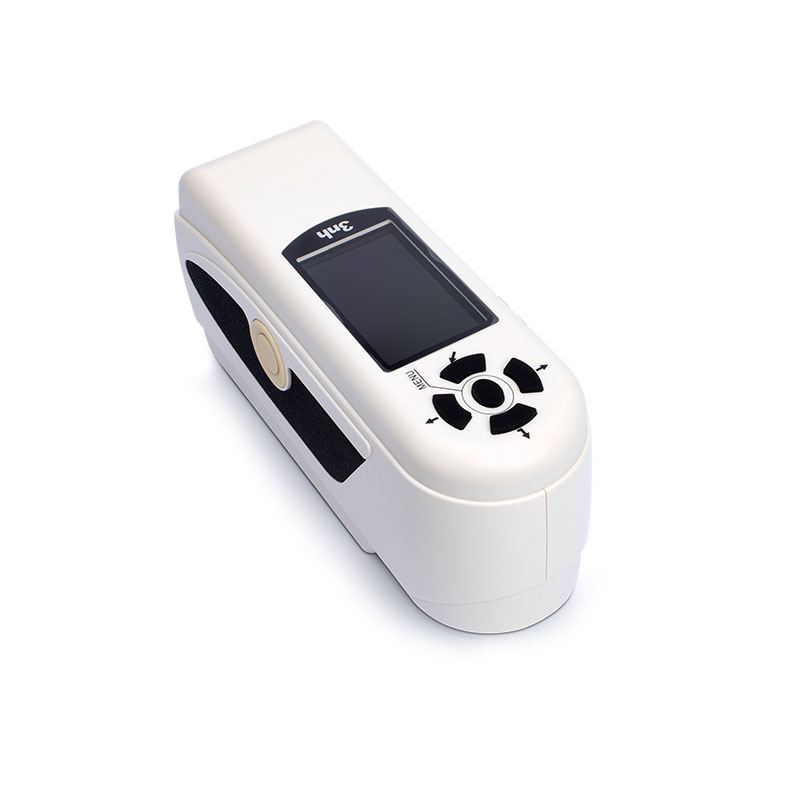
A print densitometer measures optical density: the degree of light absorption by ink layers on a printed substrate. It infers relative ink‑film thickness from reflected or transmitted light intensity, rather than measuring human‑perceived colour appearance directly.
Traditional filter‑type densitometers are purpose‑built for CMYK process press‑room monitoring and deliver fast, repeatable readings for day‑to‑day press adjustment.
In print production, densitometers quantify these key process parameters:
All these metrics are essential for stabilising press behaviour, diagnosing plate wear, fountain‑solution drift and maintaining consistent CMYK reproduction through long print runs.
Benefits of Densitometers
Ultra‑fast single‑shot measurement ideal for busy press‑floor environments
Intuitive, operator‑friendly workflow requiring minimal training
Lower upfront investment compared to spectral instruments
Outstanding performance for CMYK process‑control and press‑run stabilisation
Perfect for frequent spot‑checks while the press is running
Limitations of Densitometers
The most critical limitation: densitometers do not measure colour appearance. Two different ink formulations or substrates can produce identical optical‑density values while visibly appearing different to human observersIdeallianc....
This creates major risk for brand‑colour approval, spot‑colour validation and cross‑substrate matching. Conventional filter densitometers cannot calculate ΔE colour‑difference values, cannot generate ICC profiles and deliver very limited reliable data for Pantone and other custom spot inks.
What is a Spectrophotometer?
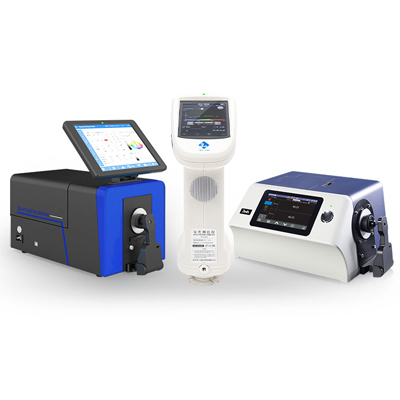
A spectrophotometer captures full‑spectral reflectance data across the visible wavelength range. It records how much light is reflected at each wavelength, producing a unique “colour fingerprint” for every measured sample. From raw spectral data, the instrument computes standard colourimetric values aligned with human visual perception.
For modern colour‑management workflows, spectrophotometer data forms the foundation of ICC profile creation, spot‑colour verification and cross‑material colour comparison.
Typical measurement outputs for printing‑grade spectrophotometers include:
CIE Lab*, LCh colour‑space coordinates
ΔE (Delta E) colour‑difference evaluation against reference standards
Full spectral‑reflectance curves
Whiteness, yellowness and substrate‑related indices
Quantitative spot‑colour evaluation for Pantone and custom special inks
Colour‑consistency comparison across different paper, film and board substrates
Benefits of Using a Spectrophotometer
Quantifies actual colour appearance as perceived by human eyes
Reliable spot‑colour measurement for special brand inks, metallic and custom formulations
Supports complete colour‑management workflows, ICC profile generation & validation
Meets spectral‑measurement requirements of ISO 12647‑2 for colour‑critical print jobs
Enables numerical pass‑fail tolerancing based on ΔE thresholds
Produces traceable measurement records for customer audits and quality documentation
Spectrophotometer Limitations
Higher purchase cost versus basic filter densitometers
Rich datasets mean slightly longer operator learning curve
Individual measurement cycles are moderately slower compared to pure densitometers
Generates large volumes of spectral and colourimetric data that require proper interpretation
Even with these trade‑offs, spectrophotometer‑grade hardware delivers strong return‑on‑investment for facilities handling brand‑controlled packaging, premium publications and colour‑sensitive commercial print.
Spectrophotometer vs Densitometer Comparison Table
| Feature | Densitometer | Spectrophotometer |
|---|
| Core Measured Quantity | Optical ink density | Full visible‑light spectral reflectance |
| Primary Workflow Purpose | Press process & ink‑film‑thickness control | Human‑perceived colour management & colour matching |
| CMYK Process‑Control Performance | Excellent | Excellent |
| Spot‑Colour Measurement Capability | Very limited | Excellent |
| Delta E / colour‑difference calculation | Not supported | Yes |
| ICC profiling support | No | Yes |
| Operator ease‑of‑use | Very simple | More advanced |
| Relative equipment cost | Lower | Higher |
| Measurement speed for press adjustments | Very fast | Moderate |
| Brand‑colour visual‑fidelity verification | Limited capability | Highly accurate |
Key take‑away: Densitometers focus on stabilising the printing machine process. Spectrophotometers verify whether the final printed output visually matches the approved colour reference standard.
Where to Use a Densitometer
Choose densitometer‑centric workflows when process stability is your highest priority, and strict visual colour‑matching for custom spot colours is not required.
Daily Press‑Side Checks
Press operators monitor solid‑ink density, dot gain and print‑contrast on control bars, making quick ink‑key adjustments to keep run‑to‑run output stable. This reduces variation caused by ink viscosity changes, plate degradation or fountain‑solution drift.
Standard CMYK Four‑Colour Printing
For general CMYK commercial print, density readings provide actionable feedback for press tuning and help keep dot‑reproduction within target TVI tolerances.
Small‑Budget General‑Purpose Print Shops
Densitometers deliver cost‑effective process control for print houses that handle limited spot‑colour and brand‑critical packaging assignments.
High‑Volume Fast‑Cycle Production
Thanks to near‑instant readings, densitometers suit environments requiring repeated rapid sampling while presses keep running.
Where to Use a Spectrophotometer
Deploy spectrophotometers whenever visual colour fidelity, brand‑colour integrity or spot‑colour accuracy represent contractual requirements for your print job.
Brand‑Controlled Packaging & Marketing Collateral
Packaging, labels and advertising print materials must replicate exact brand colours across different production batches, print sites and substrate types. Spectrophotometers provide objective ΔE‑based pass‑fail assessment against master colour references.
Spot‑Colour / Special‑Ink Printing
Unlike densitometers, spectrophotometers reliably measure Pantone, corporate spot colours and many effect inks, enabling objective comparison between proofs and finished printed sheets.
Full Colour‑Management Implementation
Print houses building ICC‑based digital‑proofing and production workflows require spectral data for profile creation, validation and troubleshooting metamerism risks between proof and press output.
Compliance‑Focused Premium‑Grade Printing
Spectrophotometer measurements satisfy ISO printing‑standard spectral‑measurement requirements and create archived, audit‑ready quality records for brand‑owner qualification and third‑party certification programmes.
The Rise of Spectrodensitometers
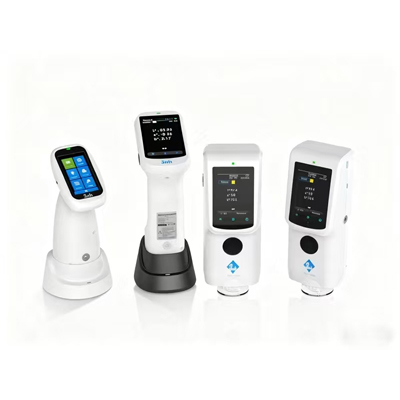
Modern printing hardware has evolved to merge both measurement principles inside a single handheld unit: the spectrodensitometer.
A spectrodensitometer captures full spectral reflectance data and computes traditional Status T / Status E / Status A densitometry metrics from that spectrum, combining press‑process control and colour‑fidelity verification in one deviceThreenh.
Key Advantages of Spectrodensitometers for Modern Print Workflows
Unified hardware for both press‑room density adjustment AND spot‑colour / brand‑colour validation
Eliminates the need to maintain two separate dedicated measuring instruments
Reduces equipment‑investment overhead and simplifies operator training
Supports M0/M1/M2/M3 measurement modes for papers containing optical‑brightening agents (OBAs)
Generates both process‑control logs and colour‑difference audit records within one dataset
Spectrodensitometers have become the preferred versatile solution for mid‑to‑large print facilities handling mixed CMYK, spot‑colour and packaging workflows.
Choosing the Right Instrument for Your Business
Select a pure densitometer if:
Your majority output is standard CMYK process print
Press‑process stabilisation is your primary QC priority
Capital‑equipment budget is constrained
Spot‑colour and strict brand‑colour matching requirements are rare
Select a standalone spectrophotometer if:
Spot‑colour and branded packaging jobs make up a large share of your order book
You need to validate colour against customer‑provided master references with defined ΔE tolerances
Your facility operates full ICC colour‑management workflows
You must deliver formal spectral‑based QC reports for client audits
Select a spectrodensitometer for maximum versatility:
If your print shop handles mixed work (general CMYK commercial print plus colour‑critical packaging and spot‑colour assignments), a spectrodensitometer delivers best‑value performance by supporting both densitometry and spectrophotometry in one portable instrument.
Conclusion
Both densitometers and spectrophotometers hold essential roles within professional printing quality‑control ecosystems, yet they solve fundamentally different problems.
Densitometers excel at stabilising press conditions, monitoring ink‑film thickness, dot gain and other machine‑driven variables; they remain indispensable for day‑to‑day press‑floor process management.
Spectrophotometers deliver human‑perception‑aligned colour evaluation. They verify true visual colour match, quantify spot‑colour performance and produce the spectral datasets required for brand‑colour compliance, colour management and ISO‑standard audit documentation.
Growing customer expectations for repeatable brand colour performance drive more print businesses toward hybrid spectrodensitometer hardware, which unifies both measurement capabilities.
Understanding what each tool actually measures allows print‑shop quality teams to cut waste, reduce costly re‑prints and raise overall productivity. Choosing suitable colour‑measurement hardware is not merely a technical purchasing decision — it represents an investment in consistent output, higher profitability and reliable customer satisfaction.