Call Now
Haze captures the scattering of light, transmittance measures the light that passes through a said material.
D/8°and 45°/0°are two kinds of illumination geometry with different optical geometry design. D/8°illumination geometry is more widely used for the color comparison and measurement of high-gloss materials; 45°/0°illumination geometry is mainly used in printing and packaging industries.
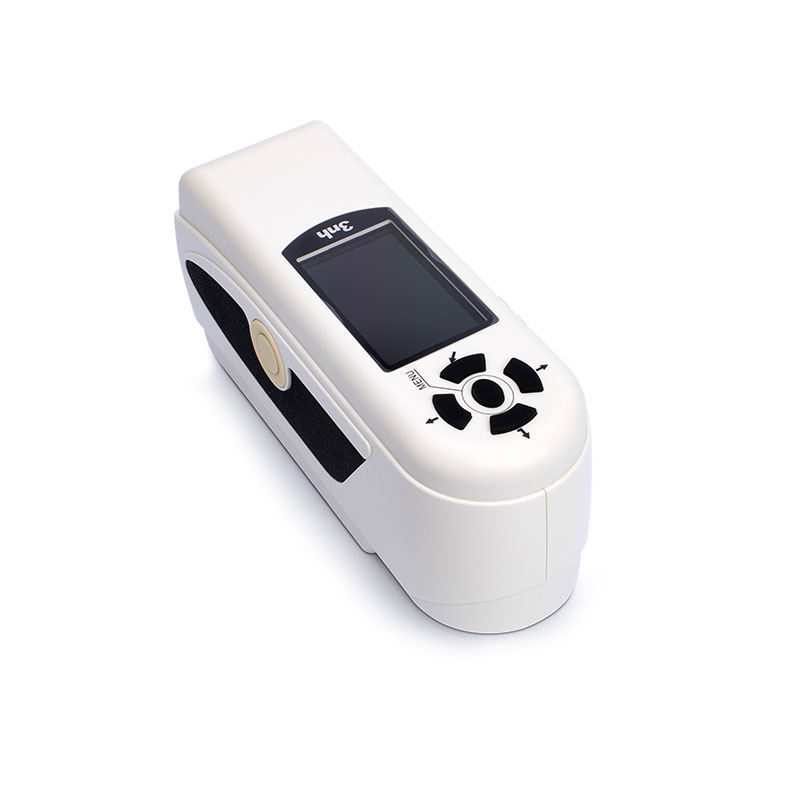
The color measurement test applies a colorimeter or spectrophotometer to evaluate the way a sample reflects or absorbs light. It is given in objective color values (L*a*b*, RGB, or absorbance) and is usually contrasted to a standard in quality control or compliance.
For complete color evaluation, the CAC is commonly outfitted with D65 (daylight), TL84 (store light), F (home light), UV, and CWF (cool white fluorescent) lamps.
Inquiry - quotation - communication - order confirming - deposit payment - production - testing and debugging - balance payment - packing - delivery - customer receiving - after service.
Colorimeters or spectrophotometers are used to measure liquid color. They measure light coming through or reflecting off the liquid. Readings can be reported as Lab*, RGB, or absorbance units. So that objective color analysis can be used to control quality, or to measure chemical concentration.
Our professional team will give you the best suggestion as long as you tell us what kind of test you need to do and the required specification.
Coating thickness is best measured with a coating thickness gauge specific for the type of substrate. Magnetic and eddy gauges are best for metals while ultrasonic gauges are best for non-metals. These devices provide measurement accuracy and consistency.
Keep light booths clean, maintain the light source lamps, readjust the calibrated light source, and ensure that dust and fingerprints do not settle on the viewing area.
Compared to an analog model, digital gauges not only provide more accuracy, but also allow for greater repeatability and are easier to work with. Advanced digital gauges allow for features such as data storage and automatic calibration and statistical analysis. For these reasons, digital gauges are the preferred choice for professional applications.