icon

Call Now

86-755-26508999

icon

Email

tilo@3nh.com

icon

Time

8:00 AM - 5:30 PM (GMT+8)

Message

Consultation

About Us

3nh specializes in high-precision color measurement instruments, including colorimeters, spectrophotometers, and haze meters, serving industries like textiles, plastics, and coatings. With innovative R&D and global reach, we deliver reliable solutions for color management and quality control, trusted by customers in over 80 countries.

Test Charts

Test Charts Frequently Ask Questions

Measuring zinc coating thickness is most commonly using magnetic induction. The gauge measures how far the magnetic probes are to the metal base under the zinc. This is the most reliable way to measure the thickness and the preservation of the galvanization.

For accurate results, install a clean and well temperature-regulated booth that is also sheltered from reflective surfaces and direct sunlight. Ambient light in the booth and the surrounding area from where the light is being viewed should not mix.


Now our testing machines have been sold to more than 80 countries, like USA, Canada, Russia,UK, Italy, Germany, European , India, Pakistan, Philippine, Singapore, Malaysia,Thailand , Vietnam, Korea,Saudi Arabia,Brazil...and so on. We sell to the global market.

With centers in 20 countries, including India, Japan, USA, Germany, Singapore, China, South Korea, and Taiwan, Threenh Technology’ s service network aims to provide customers with convenient access to service globally. With over 1 million measuring instruments sold, our expertise is our greatest asset, enabling us to work with our customers on solutions to complex measurement challenges.

Colorimeters or spectrophotometers are used to measure liquid color. They measure light coming through or reflecting off the liquid. Readings can be reported as Lab*, RGB, or absorbance units. So that objective color analysis can be used to control quality, or to measure chemical concentration.

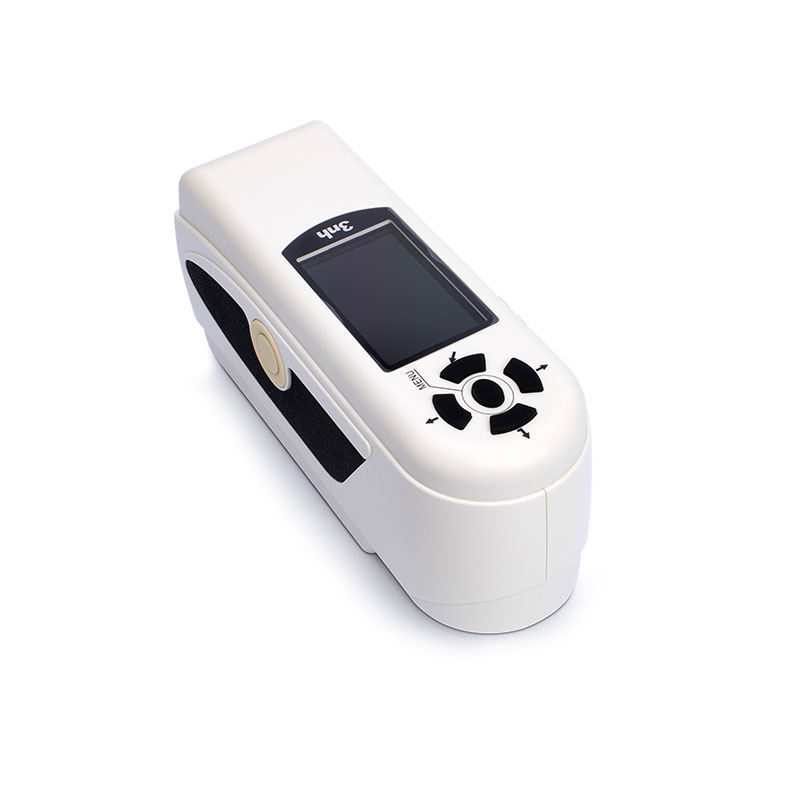
You can choose a colorimters depending on the substrate you are measuring the color of, whether it is opaque, translucent or transparent. In short, you can consider the following factors for choosing the right 3NH colorimeter for your needs: Sample Opacity, Physical Form, Optical Properties needed, Measurement Methods required, Scales and Indices needed, Instrument Standards Conformance (ASTM/ISO/Other), Instrument Geometry, Instrument Performance, Location (laboratory, portability, in-process) and Sample Handling requirements.

By systematically addressing these factors, you can select a colorimeter that optimizes accuracy, efficiency, and value for your specific application.Learn more from our ultimate guide on colorimeter selection. If unsure, consult the 3NH manufacturer for personalized recommendations based on your sample and workflow.


To answer this question, you first need to clarify your specific needs: 

  • Is it for simple color quality control (QC)?

  • To coordinate with supply chain color management?

  • To monitor on-line color stability?

  • Do you require computer color matching or production color correction?

  • What is your budget?

  • Systematic supervision and evaluation of color performance in dyed products?

If you aren’t fully clear about your requirements at the initial stage, our color management engineers are ready to communicate with you. We will recommend solutions tailored to your needs. When conditions permit, we can provide prototype demonstrations and trial testing to ensure the instrument meets your practical application requirements.

Flickering lamps, color shifts, and uneven lighting are common faults, which can be corrected by changing the tubes, cleaning the interiors, and re calibrating the light system.

There are many factors that can influence accuracy such as surface roughness, temperature, substrate material, and calibration settings. For ferrous metals, external magnetic fields can also distort measurements. Proper calibration and preparation will help reduce the impact of these factors.


Our haze meters provide consistent and accurate data as per the requirements of ASTM D1003, ISO 13468, and JIS K7105. Due to the high precision, advanced optics, and automatic calibrations, haze meters produce repeatable and precise results for glass, films, and plastics while remaining simple to operate.


A colorimeter is used to measure the intensity of color of a solution by measuring its absorbance at selected wavelengths of light. It is widely applied in chemistry, food, pharmaceuticals, and quality control to determine concentration, track color changes, or product uniformity.