Call Now
The ΔE (Delta E) formula of the CIELAB color space is usually used to measure color difference. The difference is measured in a colorimeter or spectrophotometer to gauge the level of perceptibility of the difference between two samples in terms of L*a*b*.
For a proper color evaluation, ensure cleanliness, use standardized observation conditions, eliminate stray light, and periodically change the lamps.
The haze meter test assesses the degree of light scattering that occurs when light traverses a transparent or translucent material, producing a percentage that quantifies example or cloudiness.
Now our testing machines have been sold to more than 80 countries, like USA, Canada, Russia,UK, Italy, Germany, European , India, Pakistan, Philippine, Singapore, Malaysia,Thailand , Vietnam, Korea,Saudi Arabia,Brazil...and so on. We sell to the global market.
We provide professional training to customers along with user manuals for the proper operation and maintenance of haze meters. If you have any problems during use, you can contact our experts who will quickly help you solve the problem
The accuracy of colors is determined by comparing the values of the colors (L*a*b*) of a sample with a standard reference sample using tools such as spectrophotometers. The variation is measured as ΔE. The smaller the value of ΔE, the more accurate, the nearer to the target color.
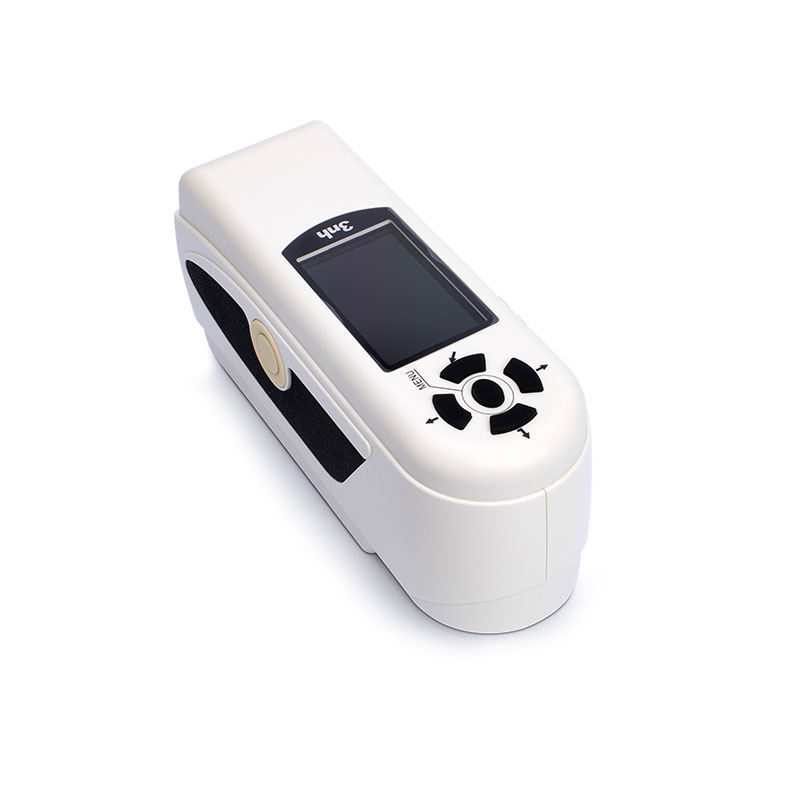
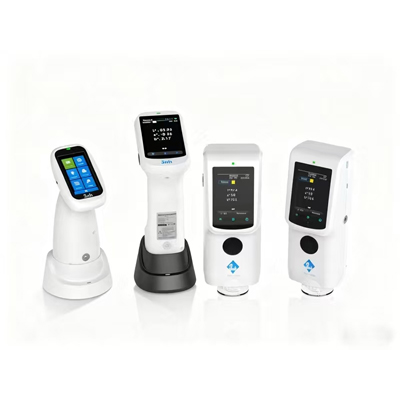
High Measurement Accuracy and Stability: Low ΔE fluctuation (e.g., NH300: ΔE < 0.07; NR10QC: ΔE ≤ 0.03 short-term repeatability); Reliable sensors (CMOS dual-beam/silicon photodiode) and long-lasting light sources (1.6M–3M measurements over 5 years).
User-friendly Design and Convenient Operation: Intuitive interfaces (e.g., NH300’s “fool-proof” operation), auto-calibration, and ergonomic grips for extended use; Versatile positioning (light/cross alignment) for precise measurements.
Robust Design: Our colorimter instruments are designed to withstand rigorous use, providing long-term reliability. Rechargeable lithium batteries enable 5,000–6,000 measurements per charge (e.g., NH300/TS7030), ensuring cost-effective durability.
PC Software Support for Functionality Expansion: PC software (e.g., CQCS3) supports color difference analysis, chromaticity indexing, and sample library management.
Global customer support: Our global presence across regions ensures you get the service and maintenance support you need to keep your instrument at peak performance.
Multiple Measurement Apertures and Application Scenarios: Multiple measurement apertures, different models have different measurement apertures and some models offer multiple optional apertures. Applicable to plastic electronics, paint and ink, textile and garment printing and dyeing, printing, ceramics, automotive, food, medicine and other industries for color quality control and color difference detection.
An 80 gloss surface will reflect less light as compared to a 100 gloss surface. Both are said to be high gloss, although 100 GU (or higher) reflects almost as much as a mirror. The distinction can be slight in graphic terms, but major in specific uses.
The five common gloss levels are:
1. Flat/Matte (0–10 GU)
2. Eggshell (10–25 GU)
3. Satin (26–40 GU)
4. Semi-gloss (41–70 GU)
High Gloss (71–100+ GU)
These levels vary slightly depending on industry and standards used.
This refers to assessing samples with a specific color and maintaining the same alloted time interval on all parameters to ensure neutrality of variables and reproducibility of lightness in the color.