Call Now
At most of time, we have Spectrophotometer stock in the factory. Generally it is 1-3 working days after the payment confirmed. After shipped, we will email you the tracking number. You can check the shipping status of your order on the website. If you are in urgent need, we can consider making special arrangement for you.
Consistency in calibration is important to account for imbalances arising from wear and tear of the probe, probe pressure, variation from the environment, and fluctuations in daily usage. This is also necessary to maintain the best quality to various international standards.
A calorimeter is used to measure heat that is gained or lost during a chemical or physical reaction. A sample is taken in an insulated container, and a temperature change is measured. This assists in computing the alterations in energy by the equation Q = mcΔT, where Q is heat.
Color evaluation will change based on how a sample is viewed. A 45° viewing angle to the source is recommended to reduce shading and achieve consistent comparison.
For accurate results, install a clean and well temperature-regulated booth that is also sheltered from reflective surfaces and direct sunlight. Ambient light in the booth and the surrounding area from where the light is being viewed should not mix.
A paint gloss meter is used to measure the level of paint gloss, whereby it reflects light at some angles, such as 20°, 60°, or 85° angles, and measures the intensity of that light. To measure surface sheen, the level of gloss is compared to standards that are calibrated and reported in units of gloss (GU).
Gloss is a broad term to describe the reflectivity of a surface. Whereas high gloss is a specific term that has the highest reflectance (usually more than 70 GU). High gloss finishes are shiny, mirror-like, and exhibit more surface blemishes than lower gloss finishes.
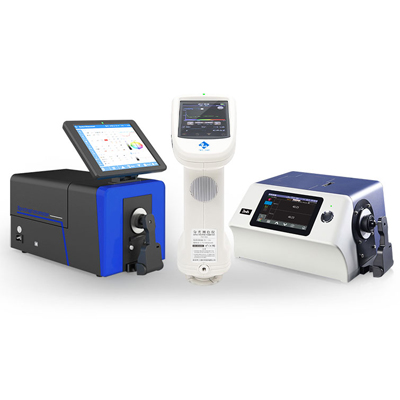
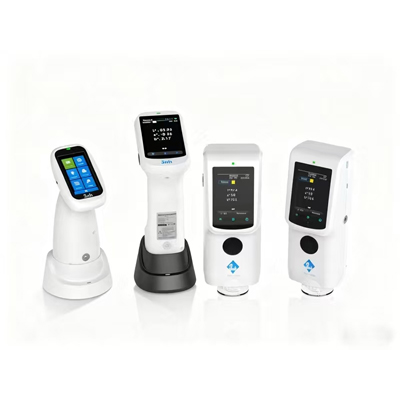
Spectrophotometer, Colorimeter, Gloss meter, Haze Meters, Coating thickness meter, window tint meter, UV meter, Leeb hardness tester, Light booth, Color Test Chart, Ultrasonic thickness gauge. Threenh Technology company adheres to independent design, research and development, production and sales of various measuring instruments.
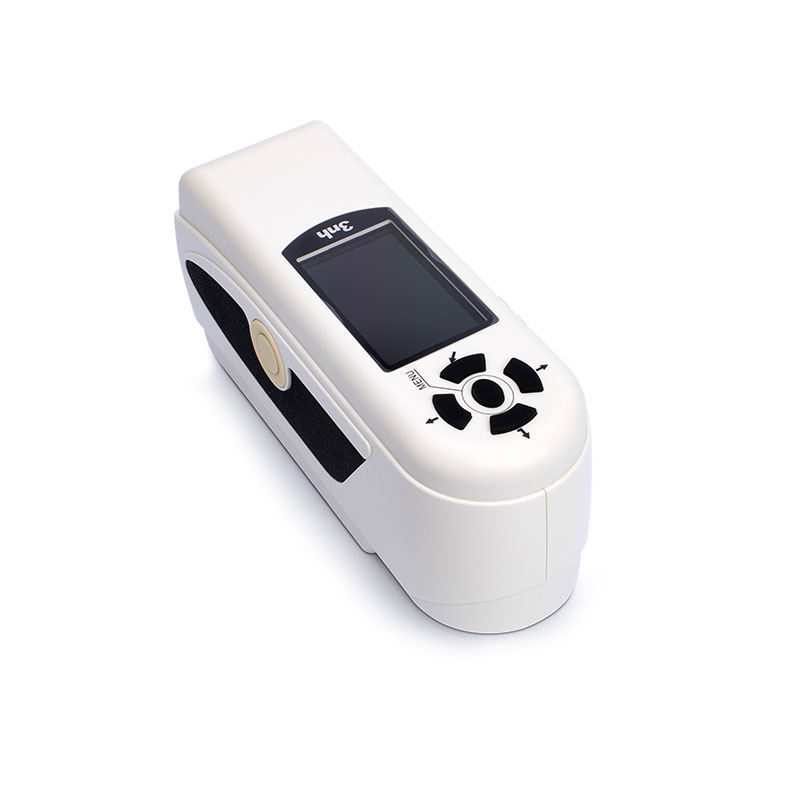
A colorimeter is sufficient for basic, routine color checks, while a spectrophotometer is needed for precise, comprehensive color analysis—here’s the clear breakdown:
Simple color matching needs: Ideal for checking if a sample matches a predefined standard (e.g., basic paint batches, plastic parts with solid colors).
Consistent lighting conditions: Works well when measurements are done under fixed, standard light sources (no need to account for varied light effects).
Cost-sensitive, high-volume tasks: Perfect for production lines requiring fast, low-cost color checks without advanced data analysis.
Precise color quantification: Necessary for measuring Lab values (lightness, red-green, yellow-blue axes) or detecting subtle color deviations (critical for automotive coatings, high-end textiles).
Complex color analysis: Required for metallic/pearlescent finishes, transparent materials, or samples with gloss/texture variations.
Compliance and documentation: Essential when precise color data (spectral curves) is needed for quality audits, regulatory compliance, or brand color standardization.
L*a*b* is an L*a*b* color space. The L* is a measure of lightness (as 0 = black, 100 = white), a* indicates the green to red axis, and b* indicates the blue to yellow axis. It is also common in color measurement in terms of precision and reliability.