icon

Call Now

86-755-26508999

icon

Email

tilo@3nh.com

icon

Time

8:00 AM - 5:30 PM (GMT+8)

Message

Consultation

About Us

3nh specializes in high-precision color measurement instruments, including colorimeters, spectrophotometers, and haze meters, serving industries like textiles, plastics, and coatings. With innovative R&D and global reach, we deliver reliable solutions for color management and quality control, trusted by customers in over 80 countries.

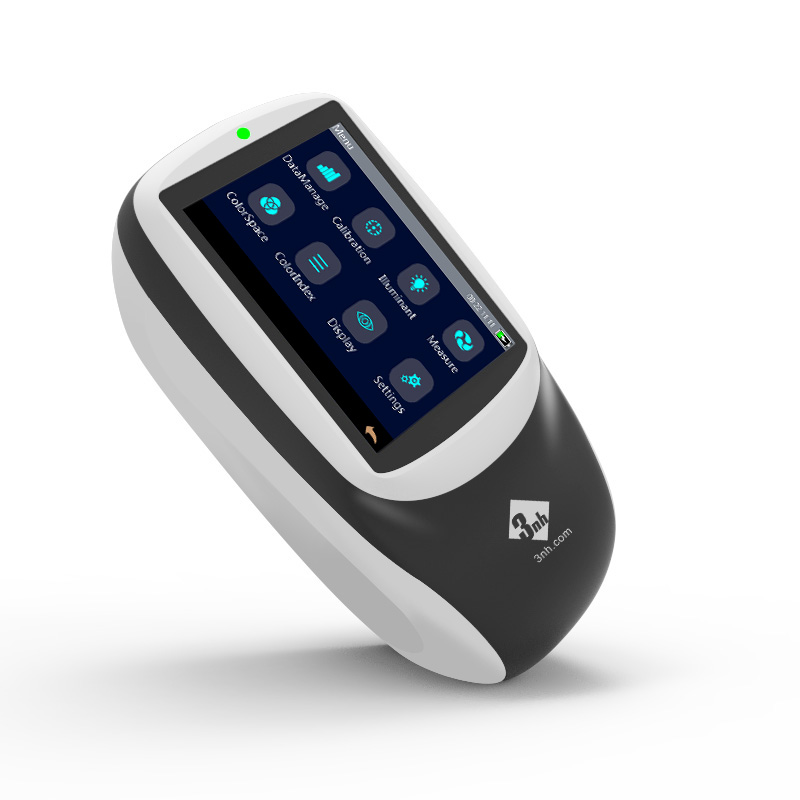
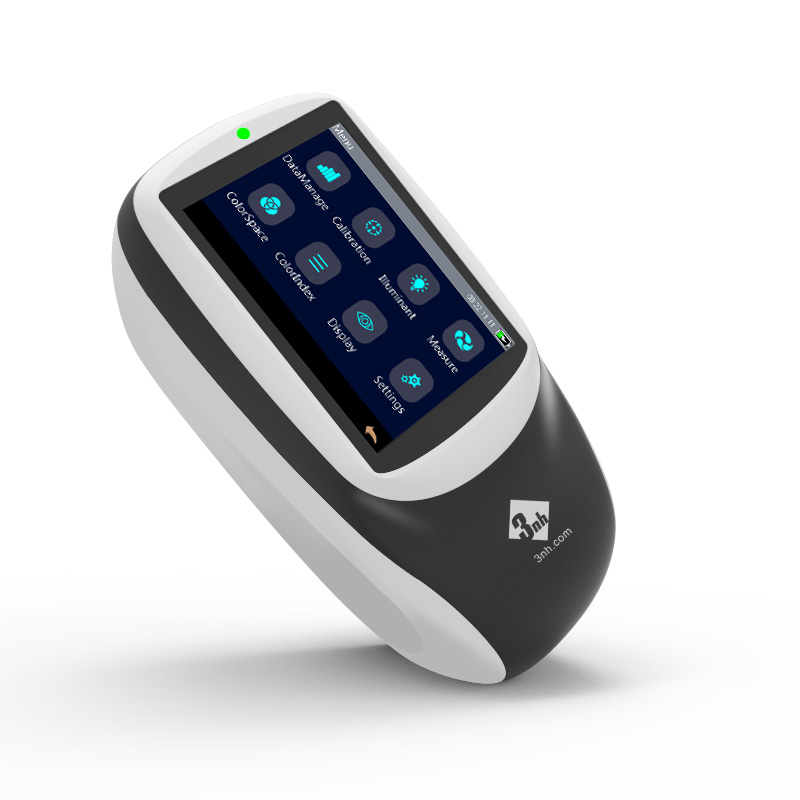
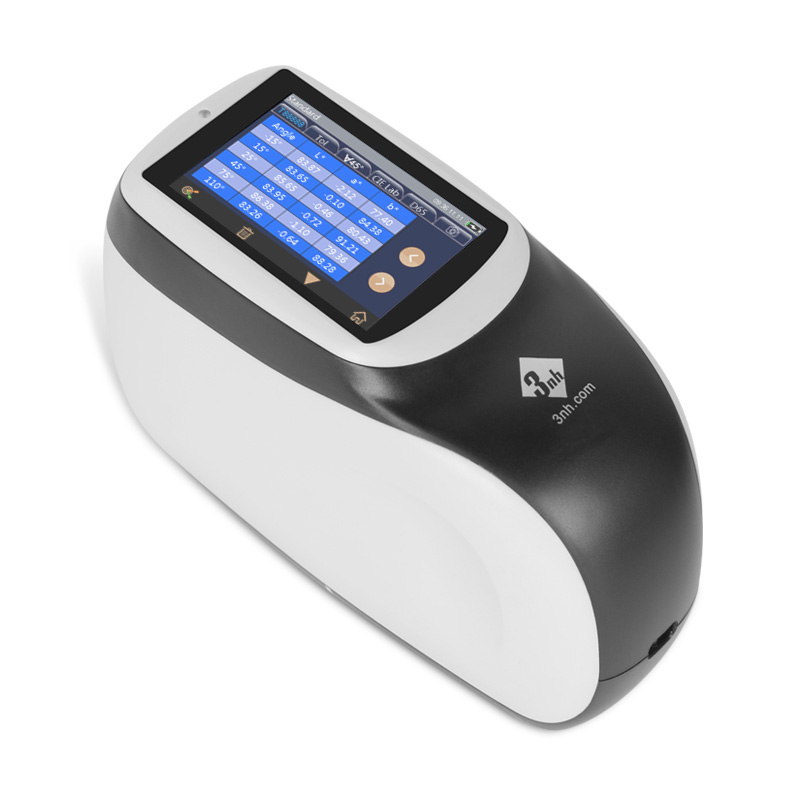
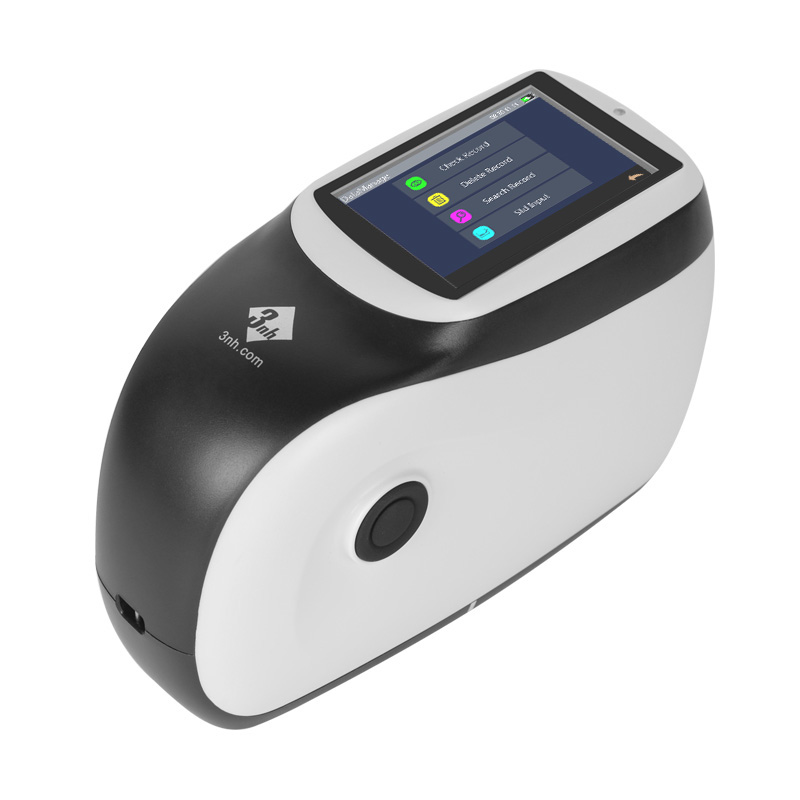
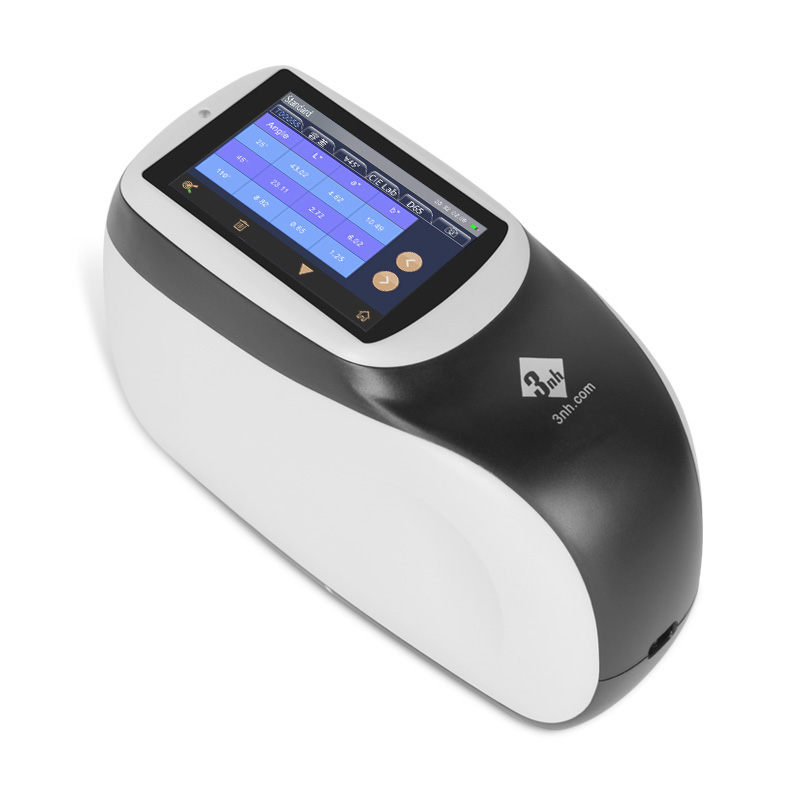
Multi-angle spectrophotometer

The Ultimate Tool for Precise Angle-Dependent Color Measurement

Are you struggling to capture consistent color data for metallic, pearlescent, or effect finishes? Do standard fixed-angle spectrophotometers fail to match real-world viewing scenarios in your production line? The 3nh Multi-Angle Spectrophotometer solves these challenges—becoming the go-to color measurement solution for industries where color accuracy defines success.


Why 3nh Multi-Angle Spectrophotometer Stands Out for Your Color Testing Needs

Unlike basic spectrophotometers that only measure color at a single fixed angle, 3nh’s advanced multi-angle design simulates how humans actually perceive color in daily life. This makes it indispensable for materials with angle-dependent color effects (e.g., metallic car paints, pearlescent cosmetics, or iridescent plastic films).

1. Unmatched Accuracy for Angle-Sensitive Colors

2. Tailored for High-Demand Industries

Our multi-angle spectrophotometer is engineered to meet the unique needs of sectors where color matters most. Search terms like “multi-angle spectrophotometer for automotive” or “cosmetic color measurement tool” lead customers straight to 3nh because we deliver industry-specific value:

3. User-Friendly Design for Seamless Workflows

Even with advanced technology, 3nh prioritizes ease of use—so your team can focus on results, not complicated setup:


Intuitive Software

Built-in tools for color difference calculation (ΔE), data analysis, and custom reporting. Export results in Excel/PDF formats for quick sharing with suppliers or internal teams.


Portable & Durable Options

Choose from benchtop or handheld models (depending on your needs) for flexibility—whether testing in a lab or on the production floor.


Global Support

3nh offers technical support and calibration services worldwide, ensuring your spectrophotometer stays accurate and reliable long-term.

Why Choose 3nh Over Other Multi-Angle Spectrophotometer Brands?

Ready to Elevate Your Color Quality Control?

Whether you’re an automotive QC manager, a cosmetic formulator, or a packaging engineer, the 3nh Multi-Angle Spectrophotometer helps you eliminate color errors, save time, and protect your brand reputation.
Searching for “best multi-angle spectrophotometer” or “accurate color measurement for effect finishes”? Look no further—3nh delivers the reliability and precision your business needs.
Contact 3nh today to request a demo or get a custom quote. Let’s make consistent, perfect color a standard in your production process.


Multi-angle spectrophotometer Frequently Ask Questions

A paint gloss meter is used to measure the level of paint gloss, whereby it reflects light at some angles, such as 20°, 60°, or 85° angles, and measures the intensity of that light. To measure surface sheen, the level of gloss is compared to standards that are calibrated and reported in units of gloss (GU).


A haze meter should be calibrated every 6 months, or more frequently if used for certain quality control processes.


The gloss scale is normally measured against the scale of 0 to 100 gloss units (GU). The scale is zero at matte and 100 at a mirror. Other very smooth surfaces can be over 100 GU at lower angles, such as 20°.


Gloss is the general reflectivity of a surface, which encompasses a variety of degrees. One particular type of finish is high gloss, which has the maximum shine and reflectance. It increases the richness but emphasizes flaws as compared to satin or matte.


Look for dirty or fingerprinted glass along the optical path, recalibrate with standards, and check the set-up for outside light so that it is controlled. If the problems still exist, please reach out to the helpdesk or book a service with your professional service.

Daylight, store light, home light, and UV fluorescence light sources are included in Pantone light boxes as D65, TL84, CWF, A, and UV. 


The dry film thickness is assessed after the coating is cured, while the wet film thickness is obtained immediately after the coating is applied using a wet film comb gauge. Dry film measurement is critical to ensuring that the coating applied matches the standards expected in terms adherence and polish. 

Colorimetry is a method that applies color intensity to ascertain the chemical concentrations. It is founded on Beer-Lambert Law, whereby the absorbance at a given wavelength is proportional to the concentration. It is popular in environmental and biochemical testing.

The most important equation is A = 2εcl, where A is the absorbance, 2 is a constant, ε is the molar absorptivity (L/mol cm), c is the concentration (molL-11), and l is the path length (cm). This can be used to relate the absorbance to the concentration, allowing quantification through colorimetric assays.


Haze captures the scattering of light, transmittance measures the light that passes through a said material.