Call Now
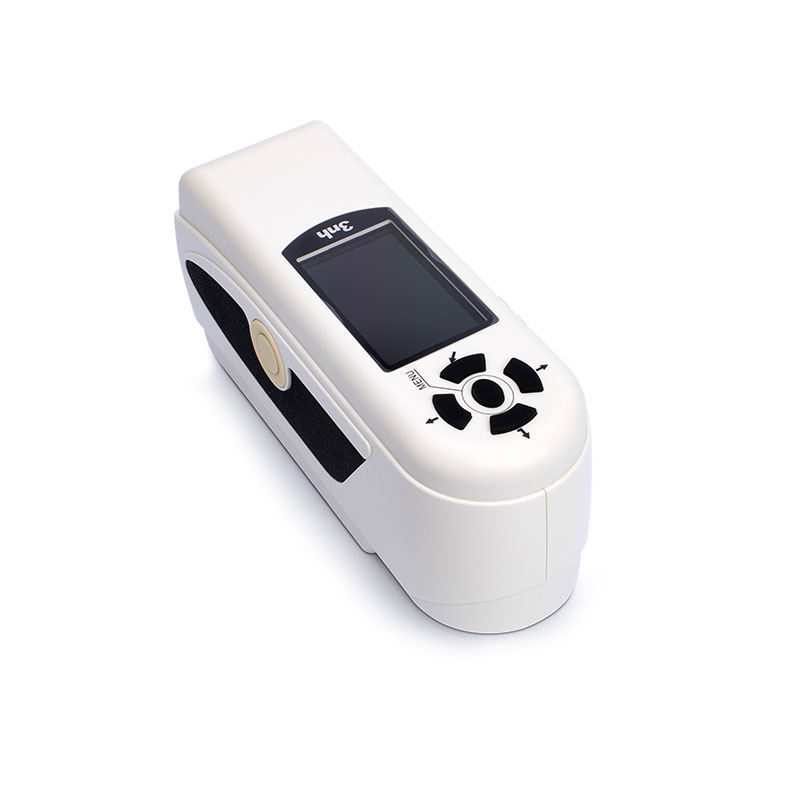
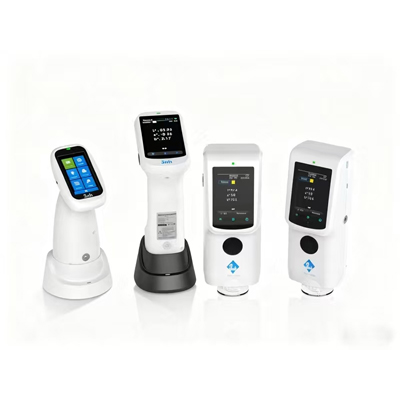
High Measurement Accuracy and Stability: Low ΔE fluctuation (e.g., NH300: ΔE < 0.07; NR10QC: ΔE ≤ 0.03 short-term repeatability); Reliable sensors (CMOS dual-beam/silicon photodiode) and long-lasting light sources (1.6M–3M measurements over 5 years).
User-friendly Design and Convenient Operation: Intuitive interfaces (e.g., NH300’s “fool-proof” operation), auto-calibration, and ergonomic grips for extended use; Versatile positioning (light/cross alignment) for precise measurements.
Robust Design: Our colorimter instruments are designed to withstand rigorous use, providing long-term reliability. Rechargeable lithium batteries enable 5,000–6,000 measurements per charge (e.g., NH300/TS7030), ensuring cost-effective durability.
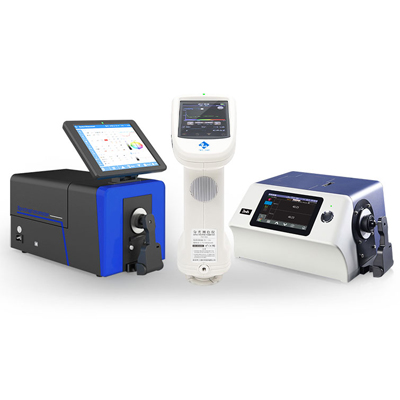
PC Software Support for Functionality Expansion: PC software (e.g., CQCS3) supports color difference analysis, chromaticity indexing, and sample library management.
Global customer support: Our global presence across regions ensures you get the service and maintenance support you need to keep your instrument at peak performance.
Multiple Measurement Apertures and Application Scenarios: Multiple measurement apertures, different models have different measurement apertures and some models offer multiple optional apertures. Applicable to plastic electronics, paint and ink, textile and garment printing and dyeing, printing, ceramics, automotive, food, medicine and other industries for color quality control and color difference detection.
Color evaluation will change based on how a sample is viewed. A 45° viewing angle to the source is recommended to reduce shading and achieve consistent comparison.
The most important equation is A = 2εcl, where A is the absorbance, 2 is a constant, ε is the molar absorptivity (L/mol cm), c is the concentration (molL-11), and l is the path length (cm). This can be used to relate the absorbance to the concentration, allowing quantification through colorimetric assays.
Different types of substrates require different kinds of digital gauges. Magnetic gauges are for ferrous metals, eddy current gauges are for non-ferrous metals and ultrasonic gauges are for any non-metal composites like plastics. Careful selection of a gauge is the most important factor for obtaining accurate measurements.
Set the 3nh booth in a tidy, stable position with neutral, clean surroundings, adequate airflow, and a reliable power source, and position it away from direct sunlight or mirrors.
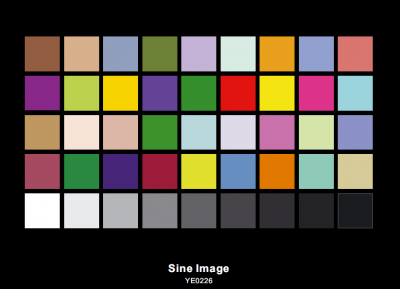
The accuracy of colors is determined by comparing the values of the colors (L*a*b*) of a sample with a standard reference sample using tools such as spectrophotometers. The variation is measured as ΔE. The smaller the value of ΔE, the more accurate, the nearer to the target color.
Yes, we can offer Spectrodensitometer quality certification issued by our lab free of charge, or issued by third-party international inspection Organizations with extra charge, please contact us for confirmation.
At most of time, we have stock in the factory. Generally it is 1-3 working days after the payment confirmed. After shipped, we will email you the tracking number. You can check the shipping status of your order on the website. If you are in urgent need, we can consider making special arrangement for you.
Yes. We can supply OEM and make customized design for any specific application. Our MOQ for OEM and ODM service is 5 pcs for one model. We can not only offer standard machines, but also customized machines. Don’t hesitate to tell us your requirement, we will try our best to meet your needs.
Once ignited, the gauge will select the correct substrate mode. The probe should be placed flat on the coated surface. The thickness of the coating will show on the screen. Measurements should be taken on different areas of the surface to ensure accuracy.