Call Now
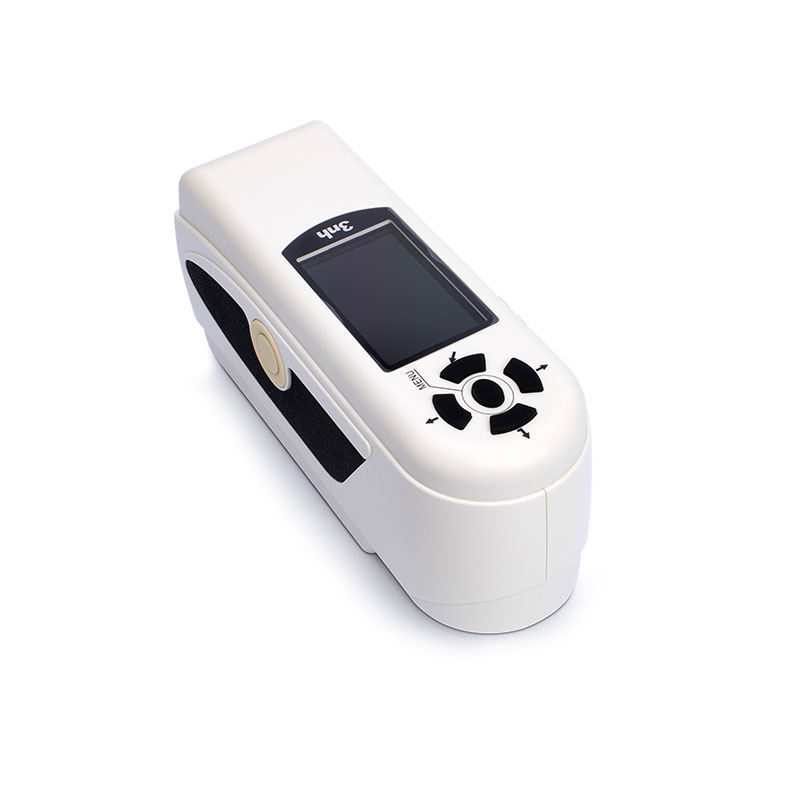
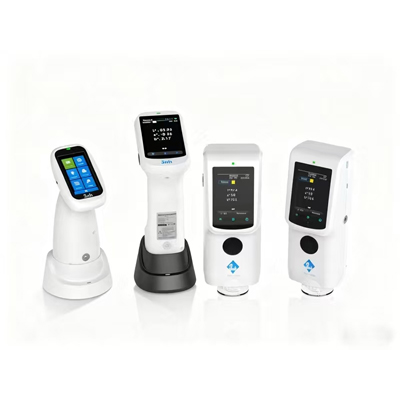
The repeatability is an important parameter for the accuracy of the colorimeter. Threenh Technology portable colorimeter for color measurements tandard deviation ΔE*ab is within 0.03 (Measurement condition: the average value of 30 measurements on the white board at an interval of 3s after calibration). Each colorimeter can pass the qualified inspection before leaving the factory to ensure it conforms to the standard of China Metrology Institute.
Yes, 3nh has a wide sales and service network worldwide, we provide overseas service through our authorized distributors or service partners located in Western Europe, Northern and Southern America, and the Asia-Pacific.
The gloss scale is normally measured against the scale of 0 to 100 gloss units (GU). The scale is zero at matte and 100 at a mirror. Other very smooth surfaces can be over 100 GU at lower angles, such as 20°.
A gloss test gauges the reflective quality of a surface by casting light at a fixed angle and measuring the amount reflected. It defines the level of shine or dullness of a surface, and it is very crucial in coatings, automotive, and product finishing
Samples should be cleaned, dried, and scratched-free to obtain consistent haze measurements.
Ensure the source, viewing angle, and background are all neutral and standardized, and the samples are clean, and positioned for a side-by-side comparison under each light condition.
L*a*b* is an L*a*b* color space. The L* is a measure of lightness (as 0 = black, 100 = white), a* indicates the green to red axis, and b* indicates the blue to yellow axis. It is also common in color measurement in terms of precision and reliability.
Who are we? Threenh Technology: 22-Year Professional Color Measurement Solution Provider
Threenh Technology is a Chinese professional Measurement Instrument manufacturer with 22 years of industry experience, specializing in the field of color measurement and surface gloss detection. Integrating research and development, design, production, marketing, and sales, the company takes technological innovation as its core and is committed to providing global customers with high-precision and intelligent testing instruments as well as professional solutions.
The most common standard measuring gloss is ASTM D523, which covers the procedures of using a gloss meter at 20°, 60°, and 85° angles. The other international standard that is widely used in industrial and laboratory applications is the ISO 2813.
There are many factors that can influence accuracy such as surface roughness, temperature, substrate material, and calibration settings. For ferrous metals, external magnetic fields can also distort measurements. Proper calibration and preparation will help reduce the impact of these factors.