Call Now
In industrial production and quality control, color consistency is one of the core elements determining product quality. Whether it is the metallic paint for automobile coating, the dyeing effect of textile fabrics, or the ink matching in packaging and printing, subtle color deviations may lead to cost waste or damage to brand image.
The LAB color space defines colors with a three-dimensional model:
Lightness (L): It indicates the lightness or darkness of a color, ranging from 0 (pure black) to 100 (pure white).
Hue and Saturation (a and b):
The a-axis represents the red-green tendency, with positive values leaning towards red and negative values leaning towards green;
The b-axis represents the yellow-blue tendency, with positive values leaning towards yellow and negative values leaning towards blue.
It is a globally recognized standard and supported by most modern color measurement equipment. Color is quantitatively analyzed by measuring Lab values with instruments.
Gloss is the general reflectivity of a surface, which encompasses a variety of degrees. One particular type of finish is high gloss, which has the maximum shine and reflectance. It increases the richness but emphasizes flaws as compared to satin or matte.
To answer this question, you first need to clarify your specific needs:
Is it for simple color quality control (QC)?
To coordinate with supply chain color management?
To monitor on-line color stability?
Do you require computer color matching or production color correction?
What is your budget?
Systematic supervision and evaluation of color performance in dyed products?
If you aren’t fully clear about your requirements at the initial stage, our color management engineers are ready to communicate with you. We will recommend solutions tailored to your needs. When conditions permit, we can provide prototype demonstrations and trial testing to ensure the instrument meets your practical application requirements.
A light booth for color matching usually contains D65 (daylight), TL84 (store), A (incandescent) and UV light. LED may also be used in modern time for additional color matching.
Turn on the hazemeter and check if the instrument’s display screen shows normally and if the buttons are responsive.
Verify that the hazemeter’s battery power is sufficient. Replace the battery or connect an external power supply if necessary.
Confirm that the instrument’s measurement mode is set correctly. Select the appropriate measurement unit and range based on actual needs.
Standard models are available in a range of sizes, starting from small desktop units which are roughly the size of 60 x 40 x 40 cm, and extending to larger units which are about 120 x 60 x 80 cm based on what you need them for.
Inquiry - quotation - communication - order confirming - deposit payment - production - testing and debugging - balance payment - packing - delivery - customer receiving - after service.
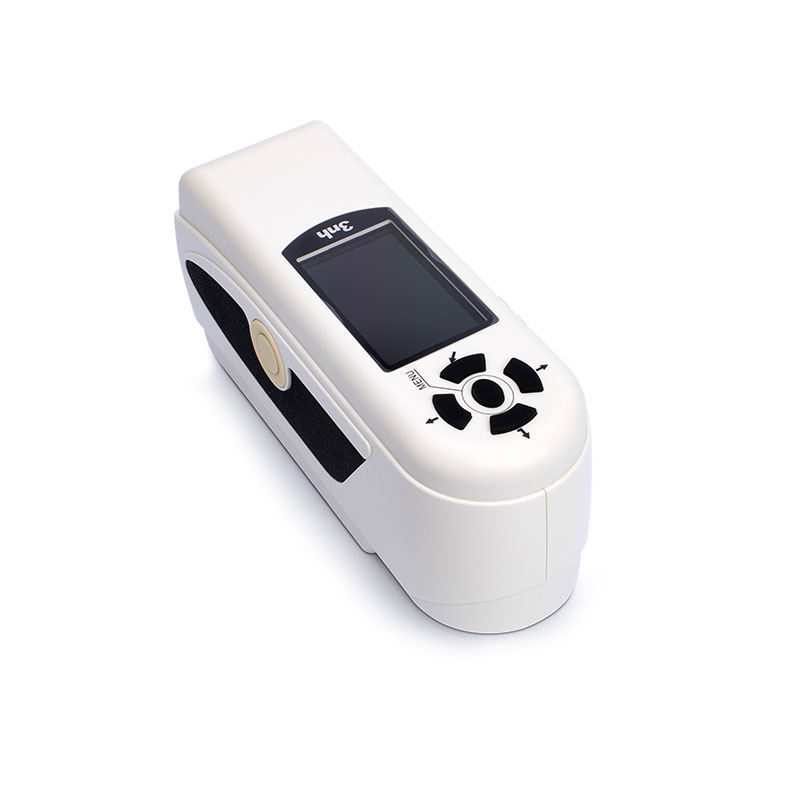
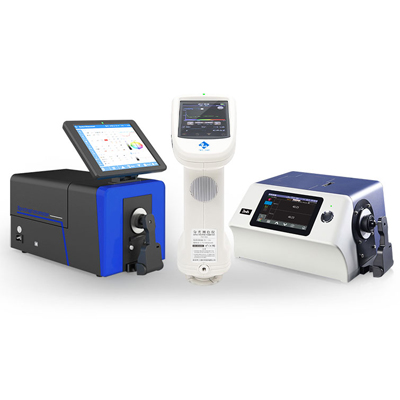
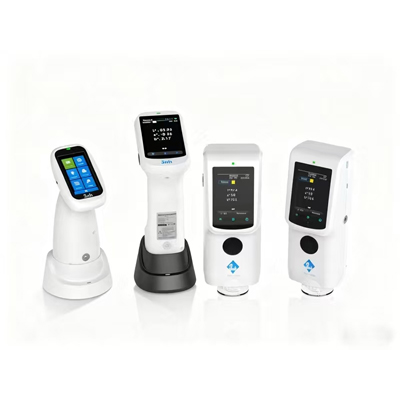
Color is measured using devices such as colorimeters, spectrophotometers, and spectroradiometers. Colorimeters are easier and good for simple color quality tests. Whereas spectrophotometers yield detailed spectral information. Hence, suitable for laboratories and industries.
The ΔE (Delta E) formula of the CIELAB color space is usually used to measure color difference. The difference is measured in a colorimeter or spectrophotometer to gauge the level of perceptibility of the difference between two samples in terms of L*a*b*.
In a Pantone light box, the tubes last around 2000 to 3000 hours, after which the brightness and color should be assessed for replacement.