Call Now
Ensure the source, viewing angle, and background are all neutral and standardized, and the samples are clean, and positioned for a side-by-side comparison under each light condition.
The color measurement theory is the quantification of the interaction of materials with light, either absorption, transmission, or reflection. It employs standard colour spaces (such as CIELAB) and devices (colorimeters, spectrophotometers) to code the visual colour into objective and reproducible data.
An inappropriate viewing angle may lead to reflections or color shifts in the light. The correct angle of 45 or 0 will provide the real color of the assessment without the distraction of glare.
The accuracy of colors is determined by comparing the values of the colors (L*a*b*) of a sample with a standard reference sample using tools such as spectrophotometers. The variation is measured as ΔE. The smaller the value of ΔE, the more accurate, the nearer to the target color.
Make sure the light sources are calibrated, keep extraneous light sources away, have the correct viewing angles, and handle the samples in a clean and uniform manner.
Now our testing machines have been sold to more than 80 countries, like USA, Canada, Russia,UK, Italy, Germany, European , India, Pakistan, Philippine, Singapore, Malaysia,Thailand , Vietnam, Korea,Saudi Arabia,Brazil...and so on. We sell to the global market.
Replace when the total hours exceed rated life, decrease in brightness, or the color temperature shifts beyond tolerance.
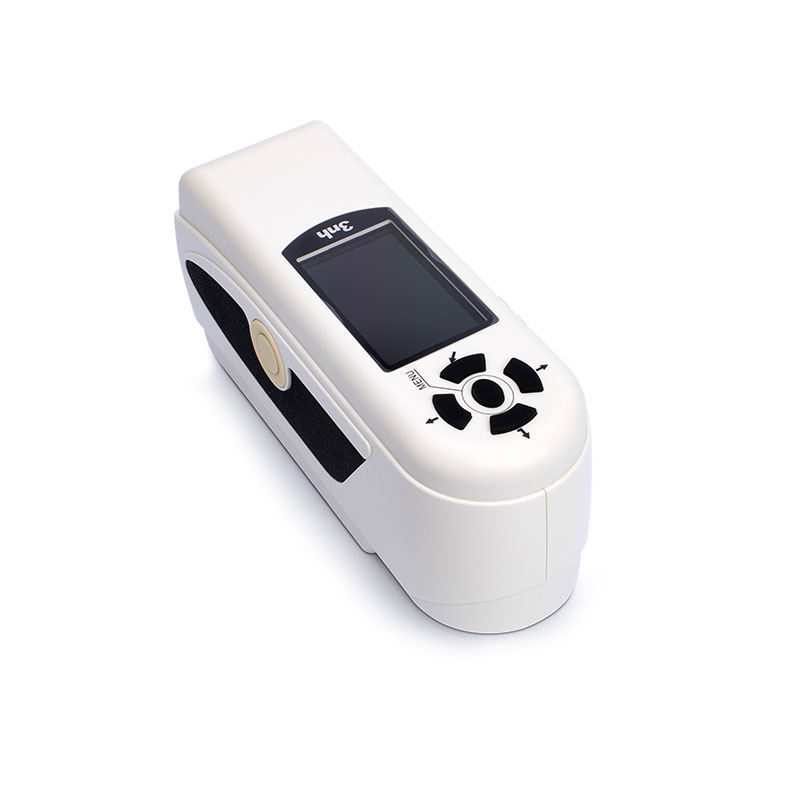
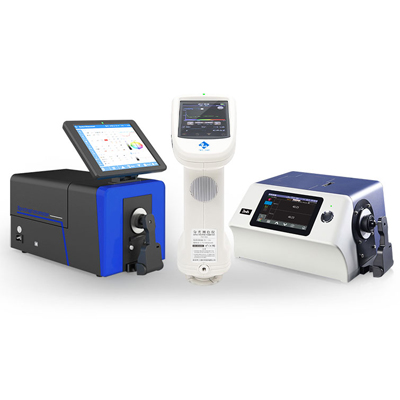
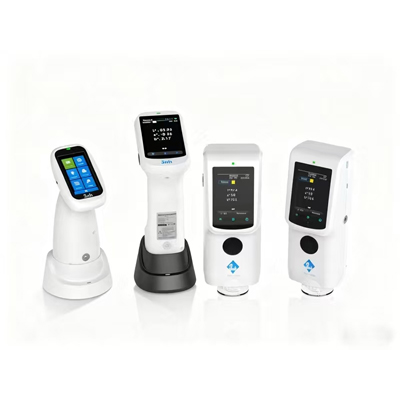
A colorimeter is sufficient for basic, routine color checks, while a spectrophotometer is needed for precise, comprehensive color analysis—here’s the clear breakdown:
Simple color matching needs: Ideal for checking if a sample matches a predefined standard (e.g., basic paint batches, plastic parts with solid colors).
Consistent lighting conditions: Works well when measurements are done under fixed, standard light sources (no need to account for varied light effects).
Cost-sensitive, high-volume tasks: Perfect for production lines requiring fast, low-cost color checks without advanced data analysis.
Precise color quantification: Necessary for measuring Lab values (lightness, red-green, yellow-blue axes) or detecting subtle color deviations (critical for automotive coatings, high-end textiles).
Complex color analysis: Required for metallic/pearlescent finishes, transparent materials, or samples with gloss/texture variations.
Compliance and documentation: Essential when precise color data (spectral curves) is needed for quality audits, regulatory compliance, or brand color standardization.
High Measurement Accuracy and Stability: Low ΔE fluctuation (e.g., NH300: ΔE < 0.07; NR10QC: ΔE ≤ 0.03 short-term repeatability); Reliable sensors (CMOS dual-beam/silicon photodiode) and long-lasting light sources (1.6M–3M measurements over 5 years).
User-friendly Design and Convenient Operation: Intuitive interfaces (e.g., NH300’s “fool-proof” operation), auto-calibration, and ergonomic grips for extended use; Versatile positioning (light/cross alignment) for precise measurements.
Robust Design: Our colorimter instruments are designed to withstand rigorous use, providing long-term reliability. Rechargeable lithium batteries enable 5,000–6,000 measurements per charge (e.g., NH300/TS7030), ensuring cost-effective durability.
PC Software Support for Functionality Expansion: PC software (e.g., CQCS3) supports color difference analysis, chromaticity indexing, and sample library management.
Global customer support: Our global presence across regions ensures you get the service and maintenance support you need to keep your instrument at peak performance.
Multiple Measurement Apertures and Application Scenarios: Multiple measurement apertures, different models have different measurement apertures and some models offer multiple optional apertures. Applicable to plastic electronics, paint and ink, textile and garment printing and dyeing, printing, ceramics, automotive, food, medicine and other industries for color quality control and color difference detection.
The principle of colorimetry is the law of Beer-Lambert, which says that the intensity of light absorbed by a colored solution is proportional to the concentration of the absorbing species and the path length. It measures the extent of light that is absorbed at certain wavelengths.