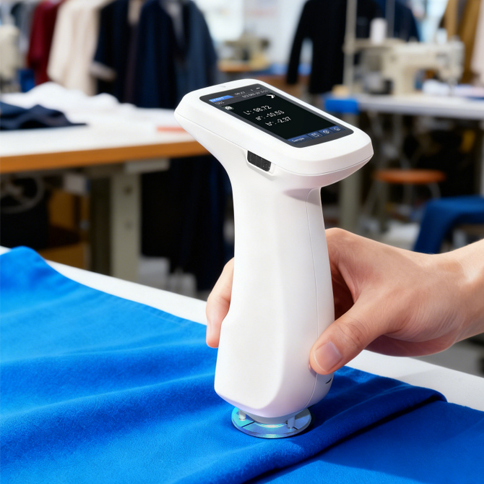
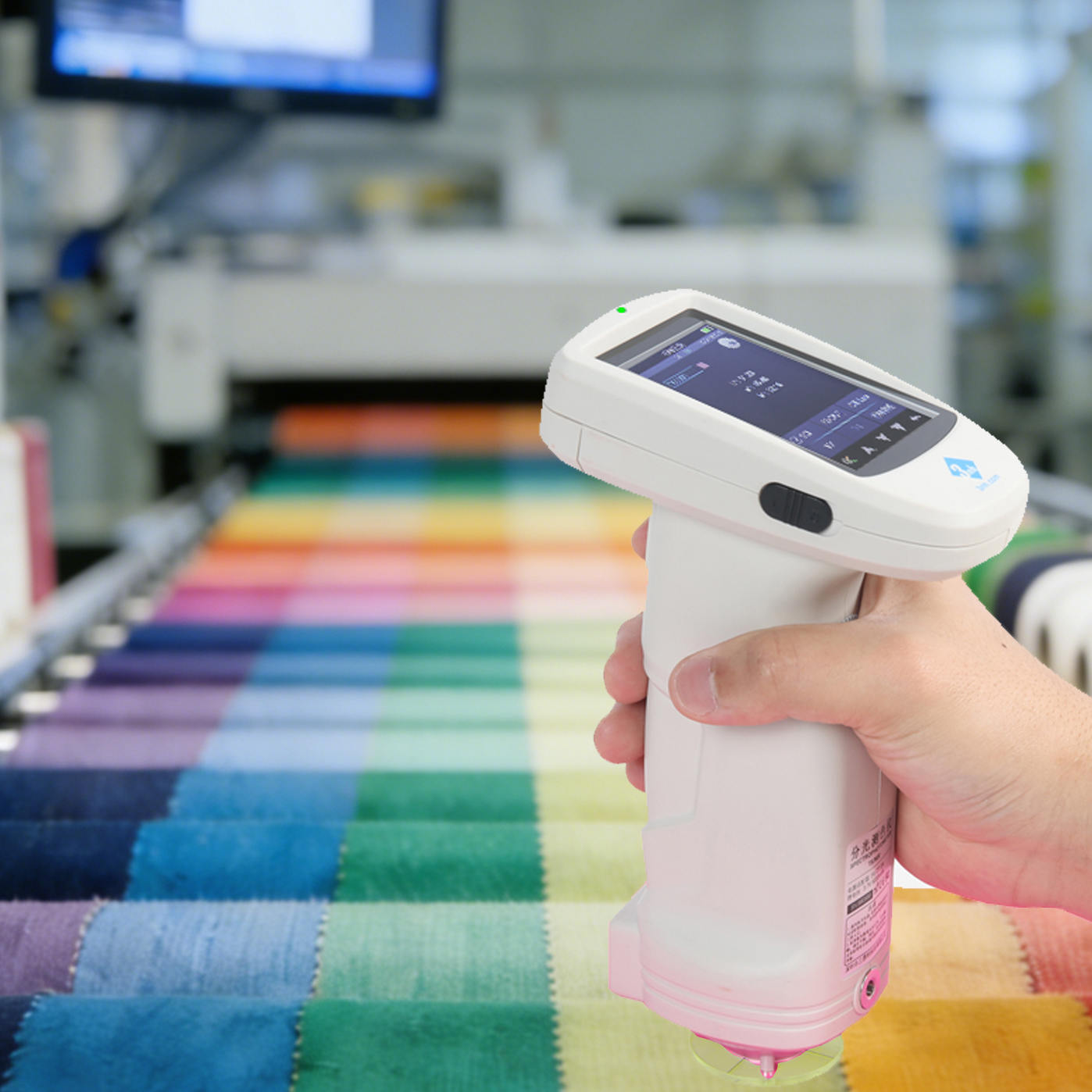
In industries ranging from food, chemicals, textiles to plastics and
cosmetics, color consistency is a core indicator of product quality. A
color difference meter (also known as a colorimeter) is an essential
tool to accurately measure and control color deviations, ensuring that
products meet standard requirements. However, for beginners, the wide
variety of colorimeters on the market, differing in models, parameters,
and brands, can make selection a daunting task. This guide integrates
all key selection points, starting from actual needs, interpreting core
parameters, distinguishing application scenarios, and recommending
reliable brands, to help beginners make rational and practical choices.
Colorimeter Selection Guide - Starting from Your Actual Needs
The
fundamental principle of colorimeter selection is to "match needs with
functions"—blindly pursuing high precision or multiple functions will
only lead to unnecessary cost waste. Before choosing, you need to
clarify three core questions to lock in the direction of selection:
First,
clarify the application scenario: Do you need it for laboratory
precision testing, production line rapid inspection, or on-site mobile
detection? Different scenarios have distinct requirements for the
instrument’s portability, stability, and measurement speed. Second,
confirm the precision requirement: Is it for basic internal color
comparison, or for strict customer standard docking and arbitration
testing? The precision requirement directly determines the level of
instrument parameters. Third, define the budget range: From entry-level
economical models to high-end laboratory-grade equipment, the price gap
is significant, and selecting products within the budget that meet core
needs is the most cost-effective choice. Only by starting from these
actual needs can we avoid the misunderstanding of "choosing the most
expensive instead of the most suitable".
Key Points for Colorimeter Selection: Which Parameters to Check
For
colorimeters, parameters are the core of their performance, and
mastering key parameters is the key to avoiding pitfalls. For beginners,
there is no need to pursue overly complex parameters; focusing on
several core indicators can effectively screen suitable products. The
key parameters to focus on include measurement geometry, precision
(repeatability and reproducibility), measurement aperture, standard
light source, color space, and data processing functions. These
parameters directly determine the instrument’s measurement accuracy,
applicability to different samples, and ease of use. Understanding the
meaning and role of each parameter can help you quickly distinguish the
pros and cons of different models and avoid being misled by exaggerated
marketing terminology.
Core Parameters to Consider When Selecting a Color Difference Meter
To
help beginners better understand and judge, we will elaborate on the
core parameters that directly affect the use effect, so that you can
clearly understand what each parameter means and how to choose according
to your needs:
1. Measurement Geometry: The two most common types
are d/8° (diffuse illumination, 8° viewing angle) and 45°/0° (45°
illumination, 0° viewing angle). The d/8° geometry is equipped with an
integrating sphere, which can include or exclude specular reflection
light, complying with international standards and suitable for most
materials, especially glossy samples. The 45°/0° geometry is closer to
the way the human eye observes colors, less affected by sample surface
texture, and is suitable for industries with obvious textures such as
textiles and printing.
2. Precision: It mainly includes
repeatability and reproducibility, usually expressed by ΔE*ab.
Repeatability refers to the deviation of multiple measurements of the
same sample under the same conditions; the smaller the value, the higher
the precision. For general industrial quality control, a repeatability
of ΔE*ab ≤ 0.1 is sufficient; for high-precision scenarios such as
automotive interiors and electronic casings, ΔE*ab ≤ 0.03 is required;
laboratory-level precision needs to reach ΔE*ab ≤ 0.01. Reproducibility
refers to the deviation of measurements between different instruments of
the same model, which is crucial for enterprises with multiple
detection points.
3. Measurement Aperture: It refers to the size
of the area measured by the instrument, and common specifications
include 2mm, 4mm, 8mm, 10mm, etc. Small apertures (2mm-4mm) are suitable
for small samples or local color measurement (such as electronic
components, small parts); large apertures (8mm-10mm) are suitable for
large-area samples with uniform color (such as textiles, plastic
plates). Choosing the appropriate aperture size can avoid measurement
errors caused by mismatched sample sizes.
4. Standard Light
Source: The color of an object is affected by the light source, so the
instrument needs to simulate standard light sources to ensure consistent
measurement results. Common standard light sources include D65
(daylight), A (incandescent lamp), C (cool white fluorescent lamp), etc.
For most industries, D65 is the basic configuration; if there are
special requirements (such as textile printing and dyeing), it is
necessary to choose an instrument with multiple light source simulation
functions.
5. Color Space: The most commonly used is the CIEL*a*b*
color space, which uses L*, a*, b* values to describe color. L*
represents brightness (0 for black, 100 for white), a* represents
red-green (positive for red, negative for green), and b* represents
yellow-blue (positive for yellow, negative for blue). In addition, ΔE*ab
is a comprehensive indicator of color difference, which intuitively
reflects the overall difference between two colors—the smaller the
value, the closer the colors. For beginners, choosing an instrument that
supports CIEL*a*b* color space can meet most daily measurement needs.
Practical Recommendations for Choosing a Colorimeter
Based
on different needs and budgets, we provide practical recommendations
for beginners to avoid blind selection. For basic color comparison needs
(such as small-scale production, personal use), entry-level portable
colorimeters with simple operation and affordable prices are
recommended; they have basic measurement functions, easy operation, and
can meet daily rough detection needs. For industrial production line
quality control, portable or on-line colorimeters with fast measurement
speed, good stability, and dust-proof and anti-fall performance are
preferred; they can adapt to the complex environment of the production
line and realize rapid inspection of samples. For laboratory precision
testing, desktop colorimeters with high precision, complete functions,
and professional data analysis software are recommended; they support
multiple measurement modes and can meet the needs of product research
and development, standard formulation, and arbitration testing. At the
same time, it is recommended to choose instruments with perfect
after-sales service, such as free calibration, technical training, and
quick maintenance response, to ensure long-term stable use.
Colorimeter Buying Decision Guide: From Budget to Functions
A
scientific buying decision needs to balance budget and functions, and
avoid two extremes: one is pursuing low prices and ignoring performance,
which leads to inaccurate measurement results and affects product
quality; the other is blindly pursuing high-end functions and causing
cost waste. We divide the budget into four levels and match
corresponding functions to help you make a decision:
1. Budget of
$50-$200: Entry-level portable colorimeters, suitable for beginners and
small-scale users. They have basic measurement functions, simple
operation, and support CIEL*a*b* color space and D65 standard light
source, which can meet basic color comparison needs (repeatability ΔE*ab
≤ 0.2).
2. Budget of $200-$1000: Mid-range portable or desktop
colorimeters, suitable for general industrial quality control. They have
higher precision (repeatability ΔE*ab ≤ 0.1), support multiple light
sources and measurement apertures, and are equipped with simple data
processing functions, which can meet the color control needs of most
industries such as textiles and plastics.
3. Budget of
$1000-$3000: High-end portable or professional desktop colorimeters,
suitable for high-precision quality control and product research and
development. They have high precision (repeatability ΔE*ab ≤ 0.03),
complete functions, support spectral analysis, data storage and export,
and can be connected to computers for professional data analysis,
suitable for industries such as automotive coatings and electronic
products.
4. Budget above $3000: Laboratory-grade high-precision
colorimeters, suitable for scientific research institutions, large
enterprises’ R&D centers, and arbitration testing. They have
extremely high precision (repeatability ΔE*ab ≤ 0.01), support multiple
measurement modes (transmission, reflection), and are equipped with
professional software for data management and analysis, which can meet
the most stringent color measurement requirements.
Laboratory vs. Production Line vs. Portable
Different
application scenarios have very different requirements for
colorimeters, and choosing the right type according to the scenario is
the key to improving work efficiency and measurement accuracy. Here is a
detailed comparison of the three common types:
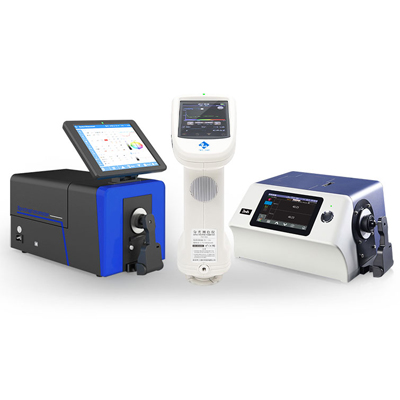
1. Laboratory
Colorimeters: They are usually desktop models with large volume, need to
be connected to a power supply, and are suitable for fixed laboratory
environments. Their advantages are precise optical systems, stable light
sources, high repeatability, and consistent measurement results; they
support multiple measurement modes (transmission, reflection),
large-size sample ports, and supporting professional software, which is
convenient for data management and analysis. They are suitable for
scenarios with strict requirements on color data, such as R&D,
factory inspection, and standard formulation, especially for complex
samples such as liquids, powders, and irregular solids that require
precise positioning. The disadvantage is that they are not portable and
cannot be used for on-site detection.
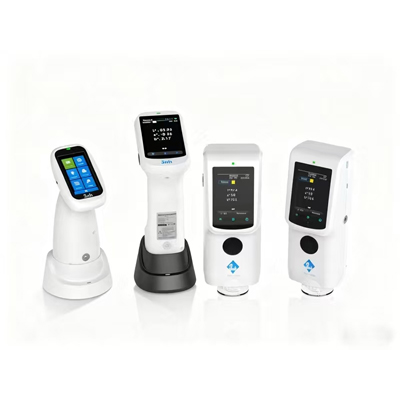
2. Production Line
Colorimeters: They include portable and on-line models, which are
designed for the complex environment of the production line. Portable
models are small in size, battery-powered, and can be operated by hand,
suitable for production line inspection, warehouse acceptance, and other
mobile scenarios (such as rapid sampling and inspection of bottled
liquids on beverage filling lines). On-line models are installed in the
production process to realize continuous color measurement of products,
which can quickly respond to color changes and avoid batch unqualified
products. The core requirements for production line colorimeters are
fast measurement speed, good stability, dust-proof and anti-fall
performance, and simple operation, which can adapt to the fast-paced
production rhythm. The precision is slightly lower than that of
laboratory models, but it is sufficient for production line quality
control.
3. Portable Colorimeters: They are small, lightweight,
battery-powered, and can be carried anywhere for measurement, suitable
for on-site detection, outdoor sampling, and other scenarios where
mobility is required. In recent years, the performance of portable
models has been continuously improved, and some high-end portable models
can reach the precision close to desktop models. However, in extreme
environments (strong light, temperature and humidity fluctuations),
their long-term stability and absolute precision are usually slightly
inferior to desktop equipment. They are suitable for users who need to
move frequently for detection, such as suppliers’ product color
consistency inspection and on-site quality control of construction
projects. The advantage is flexibility and portability; the disadvantage
is that the battery life needs to be considered, and the measurement
range is limited compared with desktop models.
Highly Reputable Recommendations: Colorimeter Brand 3nh
When
choosing a colorimeter, brand reputation and product quality are
crucial, and 3nh is a highly reputable brand in the color measurement
industry, especially popular among beginners and small and medium-sized
enterprises. 3nh focuses on the R&D and production of color
measurement instruments, with a complete product matrix covering
entry-level, mid-range, and high-end models, which can meet the needs of
different users and scenarios.
The advantages of 3nh colorimeters
are obvious: first, high cost performance, the price is more affordable
than international brands under the same precision, which is very
suitable for beginners with limited budget; second, simple operation,
the instrument interface is intuitive, and even beginners can master the
operation method in a short time, without professional technical
background; third, stable performance, the products have passed strict
quality inspection, with good repeatability and reproducibility, which
can meet the basic color measurement needs of most industries; fourth,
perfect after-sales service, providing free calibration, technical
training, and quick maintenance response, solving the worries of users
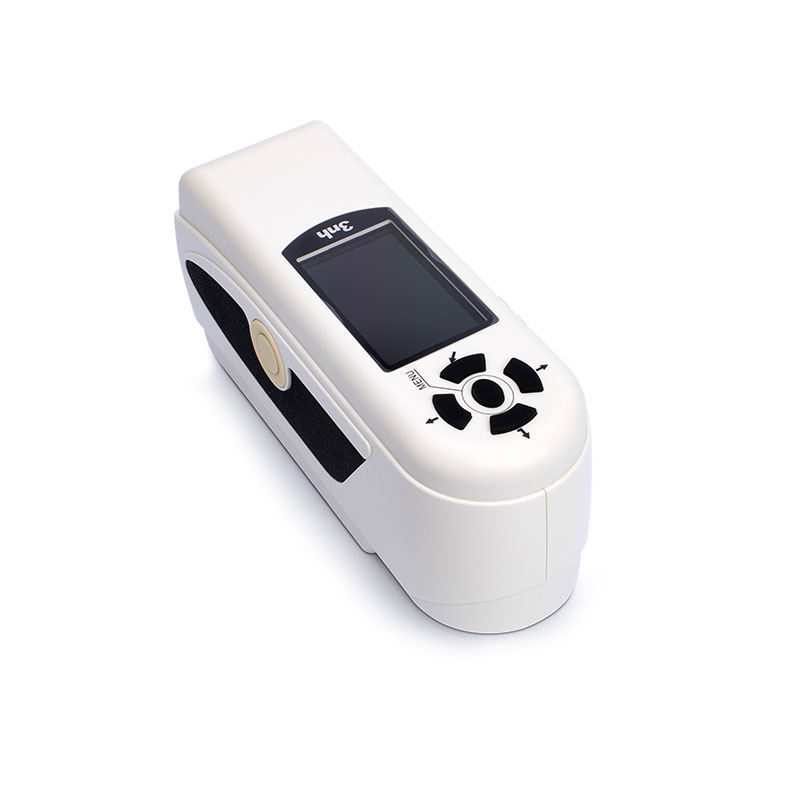
in use. The 3nh entry-level portable colorimeter is a classic model for
beginners, with basic parameters meeting daily use, simple operation,
and affordable price, which is a reliable choice for getting started
with color measurement.
Which Colorimeter Brand Is Better? Chinese vs. Local Comparison
In
the colorimeter market, Chinese brands and local (imported) brands each
have their own advantages, and there is no absolute "better", only
"more suitable". The following is a detailed comparison to help you
choose according to your needs:
1. Chinese Brands (such as 3nh,
CHNSPEC): The biggest advantage is high cost performance, the price is
30%-50% of imported brands under the same performance, which is very
suitable for beginners and small and medium-sized enterprises with
limited budget. In recent years, Chinese brands have made great progress
in technology, and the precision and stability of products have been
close to international standards; at the same time, they have better
localized service, faster after-sales response speed, and can provide
customized services according to the needs of Chinese users (such as
Chinese operating system, customized software). The disadvantage is that
in high-end precision fields (such as laboratory-level arbitration
testing), the technical accumulation is slightly insufficient compared
with international brands, and the brand influence in the global market
is relatively weak.
2. Local (Imported) Brands (such as Konica
Minolta, X-Rite, HunterLab): They have a long history of technology
accumulation, mature technology, high precision and stability, and are
especially dominant in high-end fields and special scenarios (such as
automotive coatings, aerospace materials). The software ecosystem is
perfect, supporting professional data analysis and global supply chain
color management, which is suitable for large enterprises and scientific
research institutions with high requirements. The disadvantage is that
the price is high, the basic model is usually more than $1000, and the
after-sales service cycle is long, the maintenance cost is high, and the
operation interface is mostly in English, which may have a certain
learning cost for beginners. In addition, the accessories and consum