icon

Call Now

86-755-26508999

icon

Email

tilo@3nh.com

icon

Time

8:00 AM - 5:30 PM (GMT+8)

Message

Consultation

About Us

3nh specializes in high-precision color measurement instruments, including colorimeters, spectrophotometers, and haze meters, serving industries like textiles, plastics, and coatings. With innovative R&D and global reach, we deliver reliable solutions for color management and quality control, trusted by customers in over 80 countries.

Products

Products Frequently Ask Questions

Haze captures the scattering of light, transmittance measures the light that passes through a said material.


 Inquiry - quotation - communication - order confirming - deposit payment - production - testing and debugging - balance payment - packing - delivery - customer receiving - after service. 

Lightbooths come in different dimensions. A typical tabletop model occupies 0.5-1 m². The bigger industrial variants take up 2-4 m².  If you have special requirements, we can customize the product according to your size


Consistency in calibration is important to account for imbalances arising from wear and tear of the probe, probe pressure, variation from the environment, and fluctuations in daily usage. This is also necessary to maintain the best quality to various international standards.


The LAB color space defines colors in a three-dimensional model: Lightness (L), red–green axis (a), and blue–yellow axis (b). It's a globally recognized standard supported by most modern color measuring devices. CIELAB is a standardized, device-independent system designed to map all visible colors that the human eye can perceive.

The LAB color space uses three values to define any color, each representing a specific dimension:


L (Lightness): Ranges from 0 to 100. It measures the brightness of the color, where 0 is pure black and 100 is pure white.
A (Red-Green Axis): Ranges from approximately -96 to +127. Positive values represent red tones, while negative values represent green tones.
B (Yellow-Blue Axis): Ranges from approximately -96 to +127. Positive values represent yellow tones, while negative values represent blue tones.


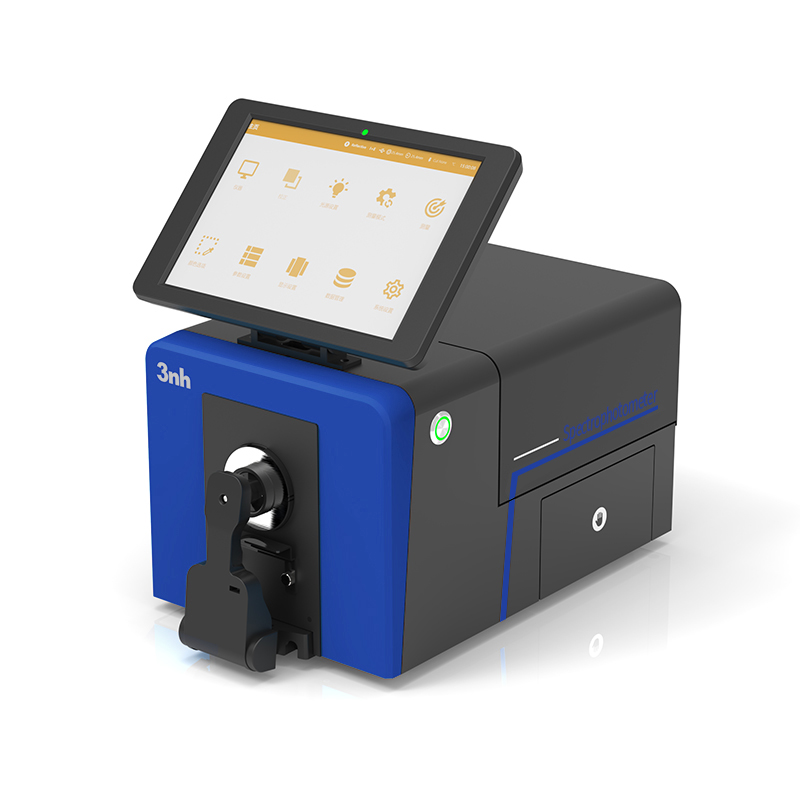
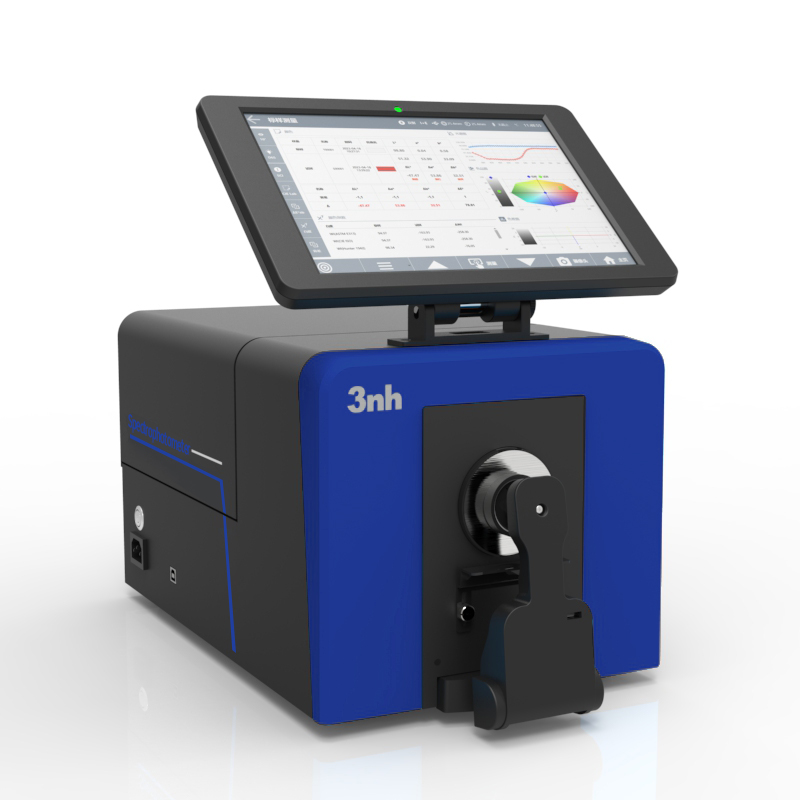
 A spectrophotometer illuminates a sample with light or passes light through it and records the reflected or transmitted light over the wavelength range. It transforms this data into color coordinates (such as L*a*b*), allowing accurate color assessment as well as color comparison to standards.


The various colors can be measured by the way a surface reflects, absorbs, or transmits light at different wavelengths. These responses may be measured using instruments such as colorimeters or spectrophotometers to give numeric values in a standardized color space such as L *a*b*.


Since part of the light will pass through the light-transmitting materials, the colorimeter is not suitable for color measurement of such kinds of materials; however, when place a pure color material with uniform texture under the light-transmitting material, we can measure the color difference between the standard and the sample. 

Compared to an analog model, digital gauges not only provide more accuracy, but also allow for greater repeatability and are easier to work with. Advanced digital gauges allow for features such as data storage and automatic calibration and statistical analysis. For these reasons, digital gauges are the preferred choice for professional applications.


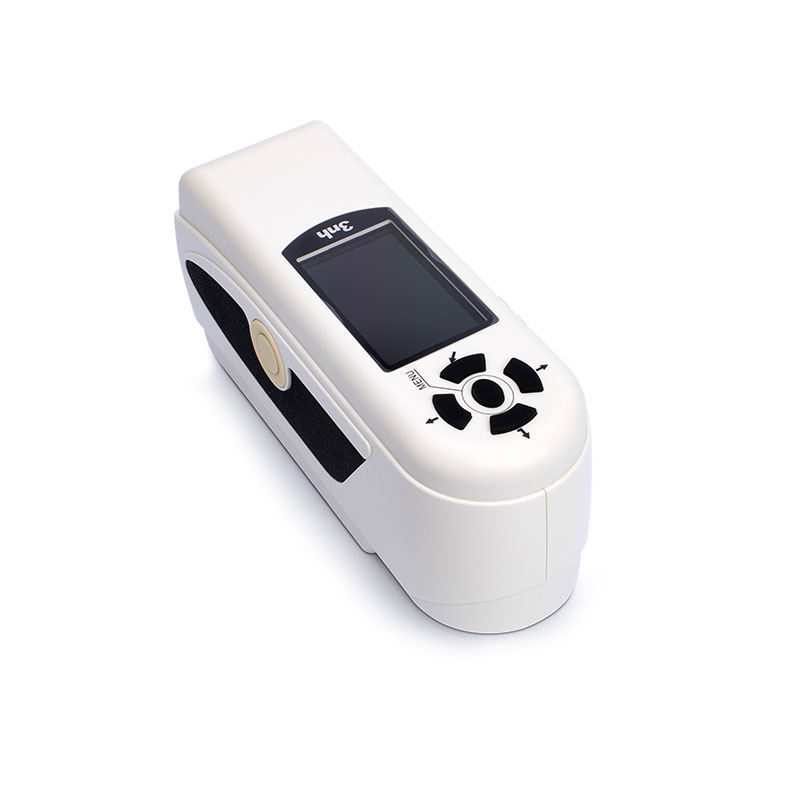
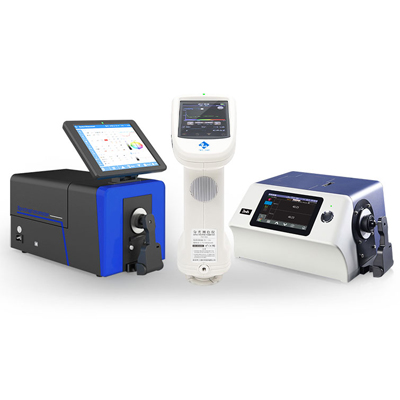
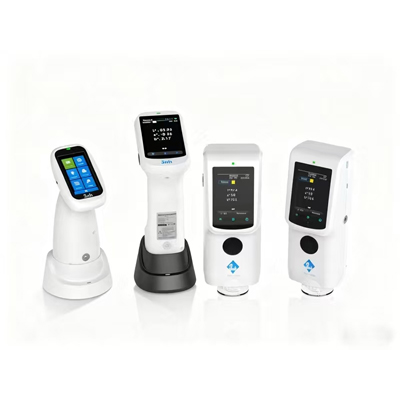
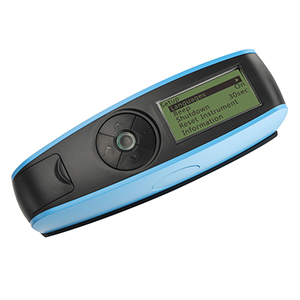
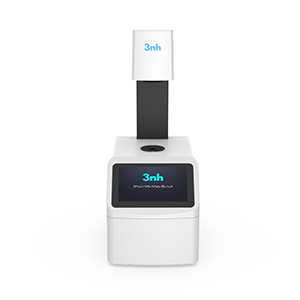
The machine used to measure color is primarily called a colorimeter or spectrophotometer. 

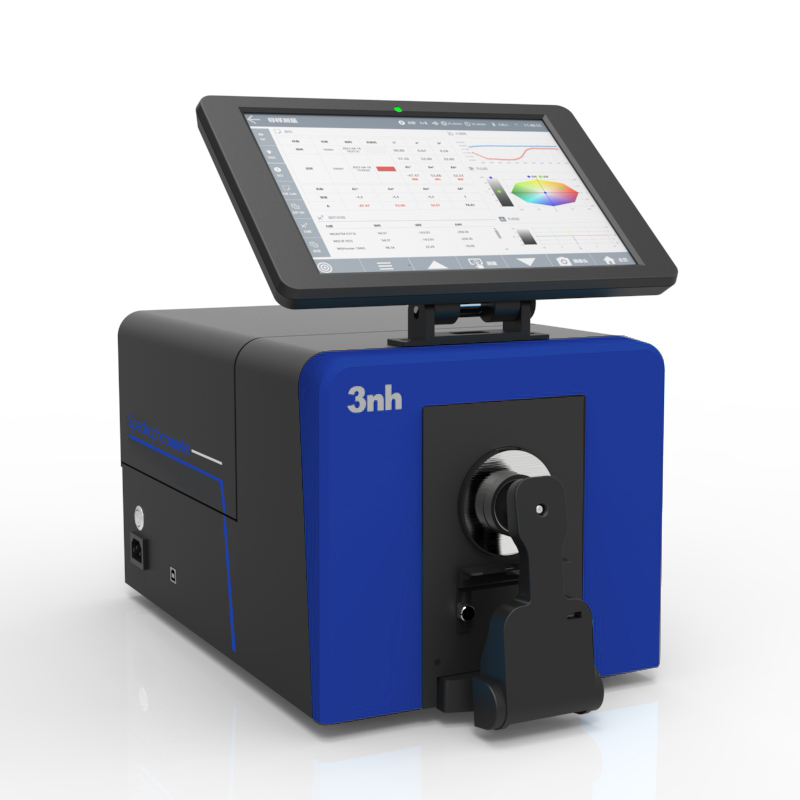
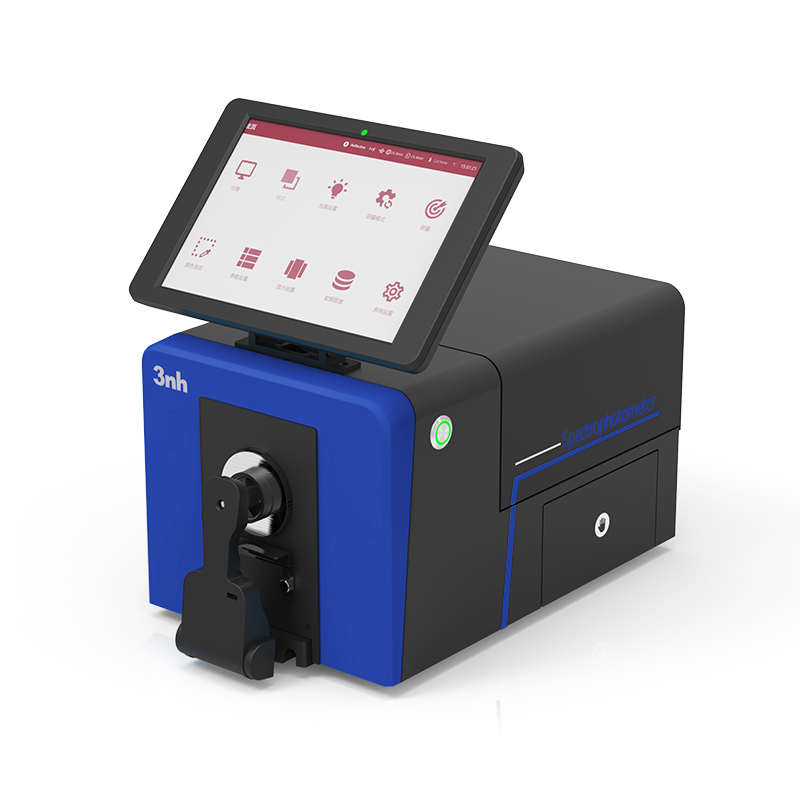
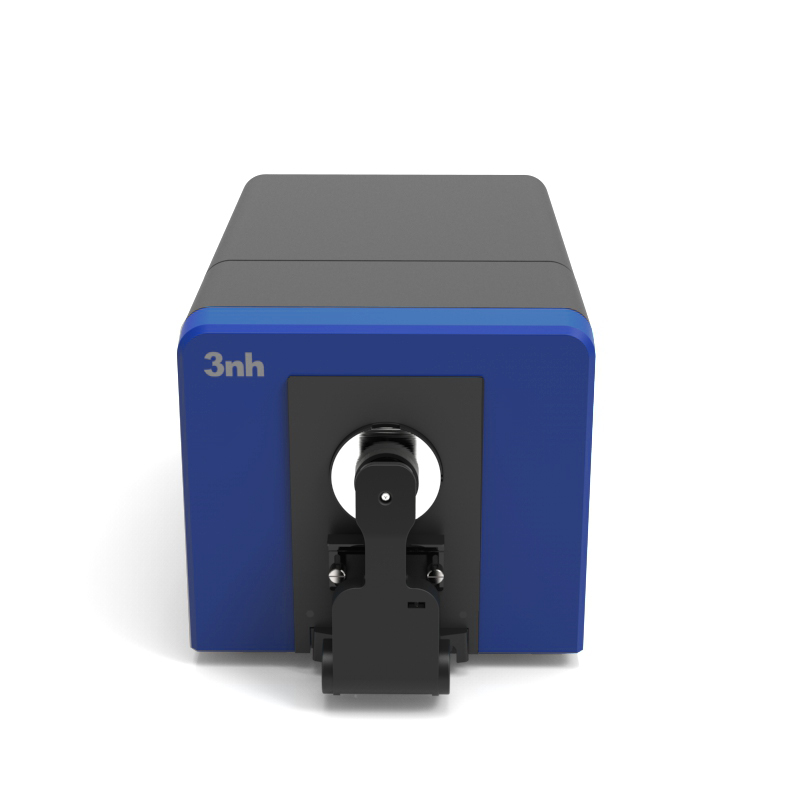
Spectrophotometer: The most common and precise type. It analyzes light reflected/transmitted by an object across the visible spectrum to quantify color accurately. A spectrophotometer can measure colors on smooth or matte surfaces, as well as textured, glossy, mirror-like surfaces, and special effect colors. It measures the reflected light of a sample at a fixed angle (e.g., 45˚) or captures light reflected at all angles to calculate color measurements that closely match what the human eye perceives. Additionally, similar to how humans flip a sample to view colors from different angles, a spectrophotometer is suitable for measuring a variety of materials and surface characteristics. Widely used in industries like paint, textiles, plastics, Chemicals, Pharmaceuticals, and printing. 

Colorimeter: Also called photoelectric integrating colorimeter, a simpler, more cost-effective option. It measures color based on three primary colors (RGB) and is suitable for basic color matching needs. A photoelectric integrating colorimeter is a color measurement device based on the photoelectric integration principle. It directly measures the tristimulus values XYZ of an object's color using three color filters (red, green, blue) and silicon photocells as three sensors. The color measurement principle of this instrument imitates the human eye's mechanism of perceiving the three primary colors (red, green, blue). It corrects the relative spectral sensitivity of the detector through color filters to match the CIE-recommended spectral tristimulus value functions x(λ), y(λ), and z(λ).

Spectrocolorimeter: Combines the functions of spectrophotometers and colorimeters, offering both spectral data and color space values for comprehensive analysis.