Call Now
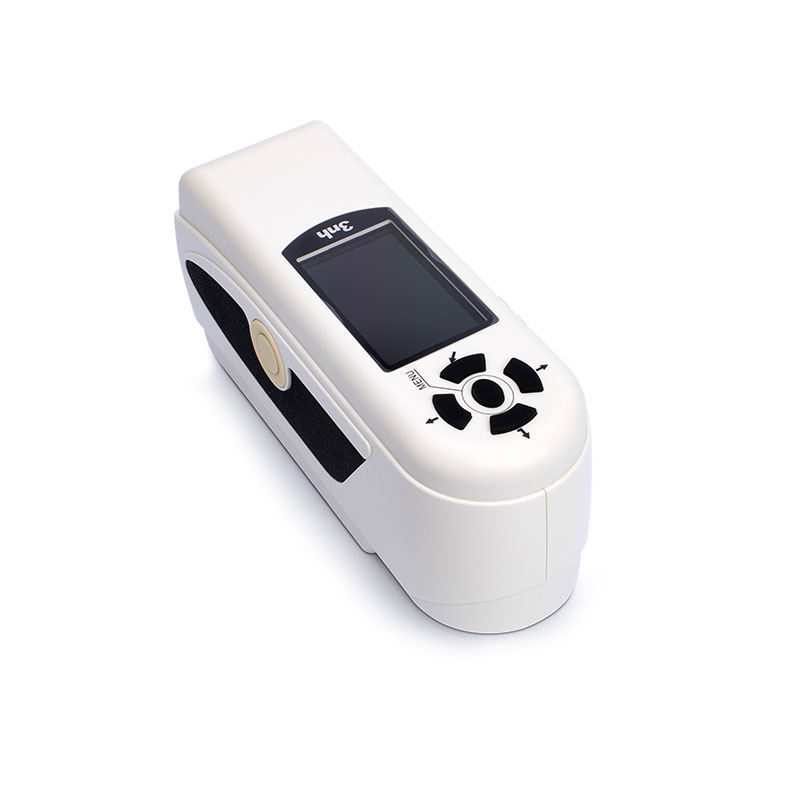
Follow the calibration steps form 3nh. Don’t touch the sample and drop the measurement light to eliminate external light.
Yes, 3nh has a wide sales and service network worldwide, we provide overseas service through our authorized distributors or service partners located in Western Europe, Northern and Southern America, and the Asia-Pacific.
Yes. However, for LED retrofitting to meet industry standards, color- calibrated LED modules must be used for accurate color rendering. We usually do not recommend customers to modify it themselves, as this can affect the accuracy of the color and cause unnecessary losses
Of course! Many portable, battery operated, and lightweight coating thickness gauges are available for on-site and field inspections. They provide quick and accurate results and portable gauges are ideal for construction, automotive, and industrial environments.
Every 2,000 - 3,000 hours or manufacturer recommendation to maintain consistent light and color quality.
Techniques of measuring color are visual color comparison, colorimetry (with colorimeters) and spectrophotometry (measuring spectral reflectance), and image analysis. Both techniques measure the reflection or absorption of light by materials and are commonly quantified. Therefore standardized in color spaces such as CIELAB or RGB.
Depending on model and location, delivery time is usually 2-4 weeks for standard models and 4-6 weeks for built- to-order ones.
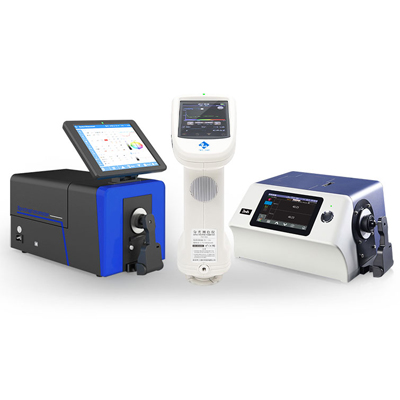
Colorimeters or spectrophotometers are used to measure liquid color. They measure light coming through or reflecting off the liquid. Readings can be reported as Lab*, RGB, or absorbance units. So that objective color analysis can be used to control quality, or to measure chemical concentration.
A coating thickness gauge measures coating thickness. It measures coating thickness using three different principles: magnetic induction, eddy current, or ultrasonic. Depending on the coating type and the coating's substrate material, the appropriate principle is selected. For industrial and laboratory use, most of these units deliver accurate, non-invasive readings.
A powder coated surface is most commonly measured for thickness post curing using a digital coating thickness gauge. This method is non-destructive, helps verify coverage uniformity and meets quality control standards. A powder comb gauge is used to estimate thickness for a pre-cured coating.