Call Now
Consistency in calibration is important to account for imbalances arising from wear and tear of the probe, probe pressure, variation from the environment, and fluctuations in daily usage. This is also necessary to maintain the best quality to various international standards.
A colorimeter measures the amount of light and the wavelength that is absorbed by a solution. It is a sign that colored compounds are present and the level of their concentration. It is applied in the laboratory and industry to check the concentrations of chemicals, the color of products, and purity.
Light booths and color matching are essential for the textiles, printing, automotive, plastics, cosmetics, and coatings industries. These fields rely on tight color alignment to protect brand value and meet global quality demands for color.
When using a Pantone light box, each sample should be positioned flat and nearby the other samples, but not overlapping. Each one should also be in the middle of the light box, and the surfaces of the light box should be clean and non-reflective.
To answer this question, you first need to clarify your specific needs:
Is it for simple color quality control (QC)?
To coordinate with supply chain color management?
To monitor on-line color stability?
Do you require computer color matching or production color correction?
What is your budget?
Systematic supervision and evaluation of color performance in dyed products?
If you aren’t fully clear about your requirements at the initial stage, our color management engineers are ready to communicate with you. We will recommend solutions tailored to your needs. When conditions permit, we can provide prototype demonstrations and trial testing to ensure the instrument meets your practical application requirements.
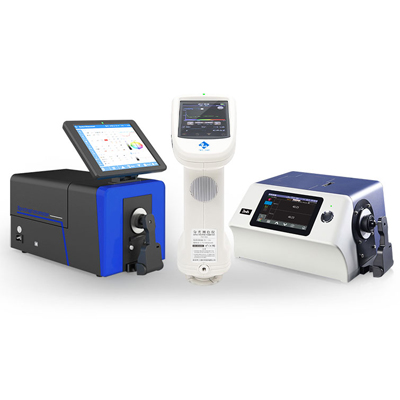
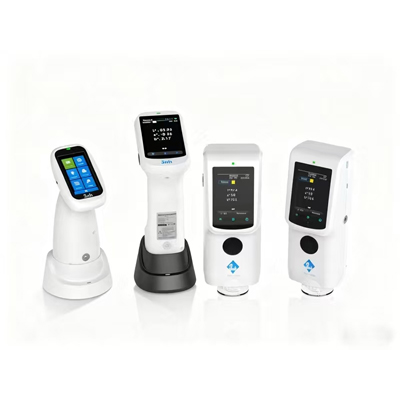
The machine used to measure color is primarily called a colorimeter or spectrophotometer.
Spectrophotometer: The most common and precise type. It analyzes light reflected/transmitted by an object across the visible spectrum to quantify color accurately. A spectrophotometer can measure colors on smooth or matte surfaces, as well as textured, glossy, mirror-like surfaces, and special effect colors. It measures the reflected light of a sample at a fixed angle (e.g., 45˚) or captures light reflected at all angles to calculate color measurements that closely match what the human eye perceives. Additionally, similar to how humans flip a sample to view colors from different angles, a spectrophotometer is suitable for measuring a variety of materials and surface characteristics. Widely used in industries like paint, textiles, plastics, Chemicals, Pharmaceuticals, and printing.
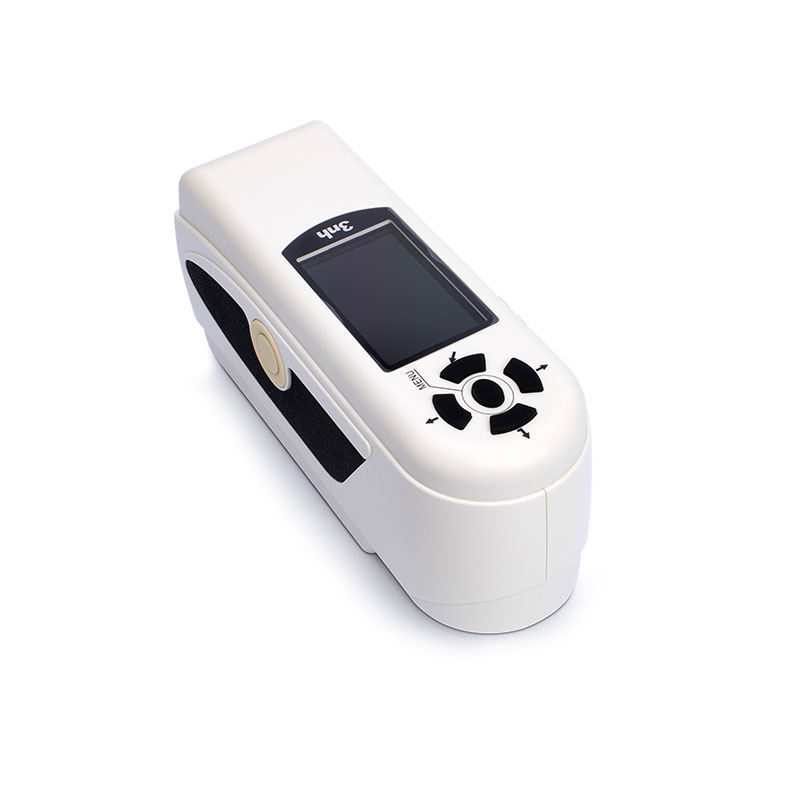
Colorimeter: Also called photoelectric integrating colorimeter, a simpler, more cost-effective option. It measures color based on three primary colors (RGB) and is suitable for basic color matching needs. A photoelectric integrating colorimeter is a color measurement device based on the photoelectric integration principle. It directly measures the tristimulus values XYZ of an object's color using three color filters (red, green, blue) and silicon photocells as three sensors. The color measurement principle of this instrument imitates the human eye's mechanism of perceiving the three primary colors (red, green, blue). It corrects the relative spectral sensitivity of the detector through color filters to match the CIE-recommended spectral tristimulus value functions x(λ), y(λ), and z(λ).
Spectrocolorimeter: Combines the functions of spectrophotometers and colorimeters, offering both spectral data and color space values for comprehensive analysis.
To ensure a consistent color perception, observers should look at samples at a 45° light angle and 0° viewing angle to reduce glare.
The haze meter test assesses the degree of light scattering that occurs when light traverses a transparent or translucent material, producing a percentage that quantifies example or cloudiness.
A digital coating thickness gauge is used to measure the thickness of dried paint. It measures coating thickness specification non-destructively, helping to maintain consistent quality and performance.
Yes, we can offer Spectrodensitometer quality certification issued by our lab free of charge, or issued by third-party international inspection Organizations with extra charge, please contact us for confirmation.